
Norwegian Salmon Is Big in Japan: A Decades-Long Marketing Success Story

#
17.03.25
Raw salmon has become firmly ingrained in Japanese cuisine and is widely used in sushi, sashimi, tataki, etc. But this was not always the case.

Surprisingly enough, raw salmon was brought to Japan from Norway.

Sushi has gained worldwide popularity and become the symbol of Japanese culinary traditions. However, sushi recipe as we know it now came about only in the 19th century, and for a long-time raw fish like salmon was not used in it. Due to the possible risk of parasites, only processed salmon was consumed.

In the 1980s development of the aquaculture sector allowed Norway to start exporting extra products of fish farming. It was at this time, when the fisheries in Japan ceased to meet the demand of locals due to the rapid population growth and a shortage of fishing quotas. In order to enter the market with the new product Norwegian producers had to face a number of prejudices, the need to process salmon before consumption being the main. Unlike the popular raw tuna, local Japanese salmon was usually eaten fried. This obstacle has initiated the start of the ten-year “Japanese Project”.

Norwegian salmon suppliers could not openly state that their fish is parasites-free, therefore they decided to prove their point by changing the perception on the waters the salmon was coming fr om. Hence, they put much emphasize on the cleanliness of Norwegian waters. In addition, it was decided to change the traditional name for pacific and river salmon Sake (鮭) to Sāmon (サーモン), term derived fr om English. However, this strategy did not make much of a difference.

The situation has improved with the support fr om a famous Japanese frozen food manufacturer. Norwegians offered them tons of cheap salmon, which was later promoted in stores as an ingredient for sushi. Since the product was sold at a lower price range, it was more suitable for the affordable conveyor belt sushi restaurants, wh ere salmon sushi has reached popularity among general public. Raw salmon was even promoted by celebrity chefs on the TV cooking shows like the famous “Iron Chef”. As consumers have become familiar with its taste, demand for Norwegian salmon began to climb.
The first stage was later followed up by the “Second Japanese Project”. This time, salmon was promoted not as a topping for sushi, but as a meat alternative. The campaign introduced Japanese public to cuisine from Europe and featured dishes such as salmon steak, katsu and salmon nanban.

And what about us?

Aquaculture-raised Atlantic salmon and trout have begun to be used in Japanese cuisine in Russia. Despite the departure of many foreign suppliers from the market, a shortage of this ingredient has been avoided. Today, salmon are bred in Karelia, Murmansk, other regions of the Russian North, the Arctic Circle, and even in the Caucasus.

Other news

Aquaculture in Russia: Stabilization After Growth or the Start of a New Phase? What Lies Ahead for the Sector?

19.03.26

The question is no longer how many tonnes to produce, but which model to scale.

More

Technologies for Affordable Fish: How to Reduce the Cost of Production

23.10.25

The roundtable "Technological Aspects of Cost-Effective Aquaculture" was held within the framework of AQUA FARM GLOBAL

More
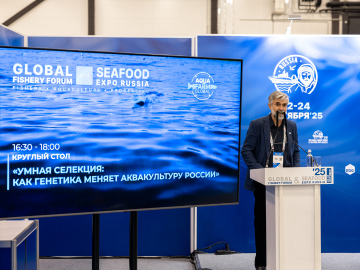
Smart Selection: how Genetics Changes the Aquaculture of Russia

23.10.25

The round table brought together representatives of science and business for an open dialogue
More

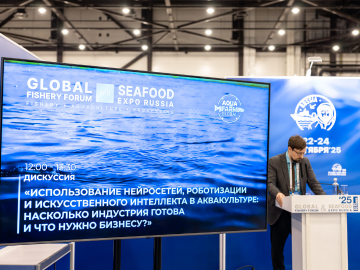
The Use of Neural Networks, Robotization and Artificial Intelligence in Aquaculture

23.10.25

A rich discussion on the use of artificial intelligence in aquaculture and fisheries took place at the round table 

More
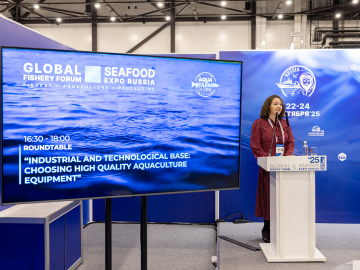
Effective Aquaculture: Selection of Equipment to Reduce Costs

22.10.25

Choosing of high quality aquaculture equipment was discussed at AQUA FARM GLOBAL 2025

More

Fisheries and Aquaculture in Türkiye: Prospects for Cooperation with Russia

25.08.25

Kemal Cem Pülten, Editor-in-Chief, Aqua Life of Türkiye Publishing Group

More

AQUA FARM GLOBAL: A series of webinars in dialogue with the industry

10.07.25

What have you already discussed and what's ahead?   

More

New Exhibitors at Seafood Expo Russia 2025: Overview No. 2

05.06.25

We are pleased to present an overview of new Russian participants in the special aquaculture and mariculture exposition

More

Seafood Expo Russia 2025: Overview of New Exhibitors No 1

22.04.25

A few new international exhibitors making their debut at this year’s event

More

Aquaculture as a Driver of Fish Consumption Growth: China's Experience

18.04.25

Which Chinese practices in aquaculture might be adapted successfully to Russian conditions?

More
All news