


Thanks to its geographical position and production capacity, Türkiye is a strong regional player in fisheries, fishing, and aquaculture. From the Black Sea to the Mediterranean, from our dams and lakes to rivers and production lines stretching to the Aegean Sea, we have the capability to deliver fresh, high-quality products to the market in the shortest possible time.
Through the participation of export associations in trade fairs in nearly 140 countries worldwide—including Russia—and the continued growth in export performance, both countries benefit economically.
Exports of Turkish aquatic products in the first half of 2025 increased by 4%, reaching USD 973.8 million in value. During this period, Russia became the largest buyer.
While exports in the same period of the previous year amounted to USD 934.1 million, the value rose despite a slight decline in volume.
In the first half of 2025, large trout (marketed as Turkish salmon) became the fastest-growing product of the Turkish aquaculture sector. Export revenues rose by 17% compared to the same period of the previous year, reaching USD 217 million.
According to the latest data, Türkiye produced 32,000 tons of trout in the first six months of the year. Long-term forecasts suggest that exports of this species may exceed USD 1 billion by 2032–2035.
Growth Dynamics of Fisheries and Aquaculture in Türkiye
First, let me briefly outline the situation: aquatic production in Türkiye covers both capture fisheries and aquaculture. In 2024, total production amounted to approximately 933,200 tons, of which 577,124 tons came from aquaculture and 356,070 tons from capture fisheries. These figures clearly demonstrate structural changes in the industry and the steady growth of aquaculture.
On the trade side, the picture is also active: in the first half of 2025, Turkish seafood exports to 140 countries totaled around USD 974 million, confirming broad access to international markets.
Main Drivers of Growth
Limiting Factors
Three Key Points for Russian Partners
Main Challenges for Turkish Companies in the Russian Market
The Russian market offers great opportunities, yet several challenges remain:
Promising Directions for Russian Companies in Türkiye
Türkiye is attractive to Russian companies thanks to its strong domestic market and strategic position as a gateway to Europe, the Middle East, and North Africa.
Three particularly promising areas are:
Additional opportunities include R&D, disease management, genetic improvement, and sustainability consulting, opening space for knowledge and technology exchange.
Most In-Demand Russian Products in Türkiye
According to the official Customs and Trade Authority, in 2024 the main imports from Russia were feed ingredients: fishmeal and fish oil, accounting for about 40–50% of total feed material imports.
Russia is also an important supplier of salmon fry for Turkish aquaculture.
In terms of technology, demand is growing for RAS, water treatment, and cold-chain equipment. Imports of such technologies increased by 15% in 2023–2024.
Direct imports of fresh or processed fish from Russia are limited, since Türkiye largely meets its own needs domestically. Thus, the most in-demand Russian products are feed materials, salmon fry, and aquaculture technologies.
Prospects for Russian–Turkish Cooperation
Geographic proximity and complementary economies create strong potential for cooperation in fisheries and aquaculture.
There are especially many opportunities in technology transfer, joint R&D, and sustainable aquaculture. Combining Russian resources with Turkish export capacity can position both countries as key players in regional supply chains.
For long-term and effective cooperation, trust-based strategic partnerships are essential, along with reducing legal and financial barriers, and harmonizing standards of quality, traceability, and sustainability.
Over the next 5–10 years, such cooperation will strengthen competitiveness in regional and global markets, bringing both economic and technological benefits.
About the Publishing Projects
Aqua Life of Türkiye – a leading media platform covering the richness of Türkiye’s seas and freshwaters, industry news, exports, and sustainable development. More than news, it is a trusted source for professionals, exporters, producers, and scientists.
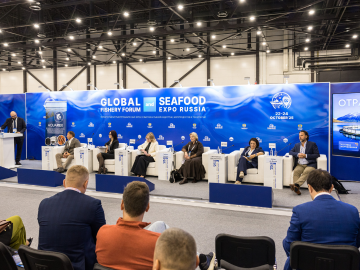
The roundtable "Technological Aspects of Cost-Effective Aquaculture" was held within the framework of AQUA FARM GLOBAL
More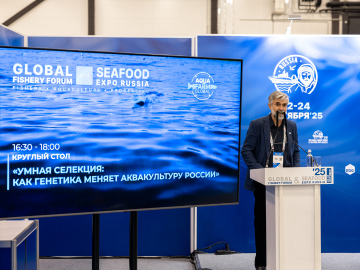
The round table brought together representatives of science and business for an open dialogue
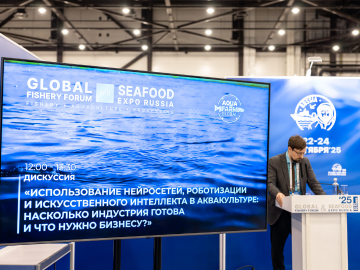
A rich discussion on the use of artificial intelligence in aquaculture and fisheries took place at the round table
More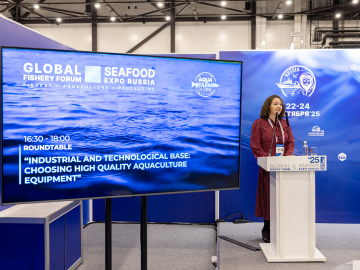
Choosing of high quality aquaculture equipment was discussed at AQUA FARM GLOBAL 2025
More
Kemal Cem Pülten, Editor-in-Chief, Aqua Life of Türkiye Publishing Group
More
What have you already discussed and what's ahead?
More
We are pleased to present an overview of new Russian participants in the special aquaculture and mariculture exposition
More
A few new international exhibitors making their debut at this year’s event
More
Which Chinese practices in aquaculture might be adapted successfully to Russian conditions?
MoreThis website uses , to ensure the best user experience and functionality of the site. By continuing to use this site, you agree to the use of cookies

