


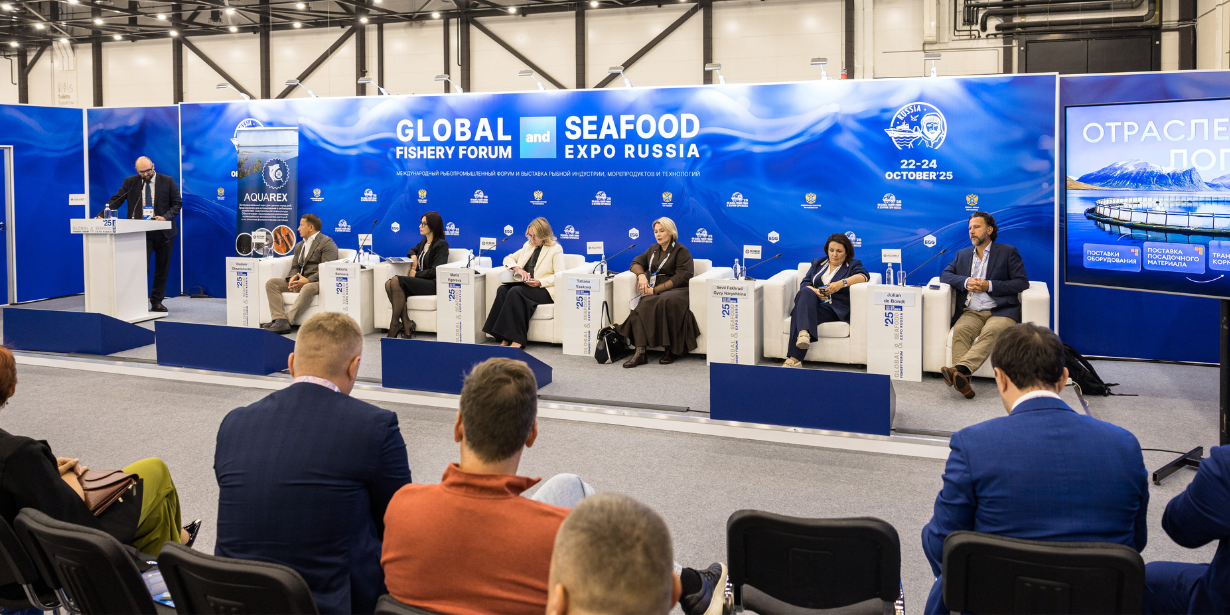
The roundtable "Technological Aspects of Cost-Effective Aquaculture" was held within the framework of the specialized exposition AQUA FARM GLOBAL in St. Petersburg on October 23, 2025. Discussion moderator Roman Artemov, Director of the Department of Applied Feed Research of Mixed Feeding and Scientific Support for Business of VNIRO, outlined the main goal: to discuss hidden reserves that will increase the availability of fish products for the end consumer. The discussion focused on logistics, feed production, RAS, scientific support and processing.
The participants of the round table were: Maria Egorova, Deputy CEO - Commercial Director, JSC "GC MELCOM"; Victoria Barinova, Ph.D., Head of the Department of Agriculture Technologies and Regulations of VNIRO; Sevil Fakhrad Gyzy Naryshkina, Director of High-Performance Agro and Aquaculture Division of Skolkovo Foundation; Vladimir Oksanichenko, CEO of JSC Kala-Ranta; Julian de Bondt, CEO and Head of Sales at Hesy Aquaculture B.V., Engineer ; Tatiana Vaskova, Director of ASK LLC, JSC "Agricultural Feed Agency".
The organizers of the event are JSC "GC MELCOM", VNIRO, and the "Skolkovo Foundation".
The first block of questions was devoted to logistics, which forms a significant part of the costs. As Roman Artemov noted, the issues of organizing the logistics of planting material and feed fall primarily on the manufacturers. Maria Egorova spoke in detail about her company's approaches to optimizing logistics in the feed industry. Maria Egorova shared that first of all they are working to bring raw materials at the most optimal rates, as well as to use subsidies if possible.
The expert called warehouse logistics and work with small batches of supplies an important direction. JSC "GC MELKOM" tries to place warehouses near customers' enterprises in order to optimize delivery time. In addition, the company tries to load warehouses as much as possible in the low season, so that in the high season the warehouses have the necessary number of products.
The next topic for discussion was the regionalization of aquaculture. Roman stressed that the principles of regionalization have already been laid down in our country, which do not always work. Victoria Barinova expressed the opinion that this approach can increase the availability of fish. She named the methods of development of regionalization of aquaculture:
It is necessary to take into account the natural and climatic conditions. Global weather changes have a serious impact on aquaculture. System planning by region will reduce the impact of these factors on the market.
It is important to effectively use Russia's water fund for the development of pasture aquaculture. It can saturate the market with low-cost products.
It is necessary to develop the introduction of a variety of technologies, facilities and methods of cultivation, which will allow to respond flexibly to local conditions and strengthen the principles of regionalization.
A separate place in the discussion was allocated for modern technologies of closed water supply installations (CV). They allow you to control growing conditions and planting density. Julian de Bondt suggested using alternative energy sources to improve the economic efficiency of RAS such as hydrothermal energy, solar panels or wind turbines. The criterion for making a decision is the balance of investments and their return. The expert also noted: the combination of RAS with the use of natural conditions where possible works best, instead of a full closed cycle.
Maria Egorova gave impressive data: "Over the past 2 years, the production of feed for RAS has increased 10 times." At the same time, the share of RAS farms themselves in aquaculture is about 10%. So far, according to Maria, the market is developing from small farms to larger ones, and the growth of large players is still ahead. Maria also shared the details of the construction of the compound feed plant of VEK LLC.
Compound feed occupies a key position in the cost of aquaculture products. Therefore, the availability of ingredients, in particular fishmeal and fat, strongly affects the market. According to Tatiana Vaskova, the market of fish meal and fats faced a shortage of quality raw materials. She stated that there are virtually no stocks of products familiar to the market in the warehouses, but there are analogues. At the same time, the quality requirements of feed manufacturers remain high, which creates additional stress.
Tatiana Vaskova also outlined the importance of state support measures to introduce subsidized railway tariffs for the transportation of fishmeal and fat from remote regions, as logistics "kills the economy very much". The expert emphasizes that under adequate economic conditions, the need can be closed, but this requires the flexibility of all market participants,
About the scientific support of aquaculture of Seville Naryshkina's story. She described the challenges faced by the R&D direction. Among them is the importance of proving to companies the feasibility of investing in innovation, as well as the need to attract people with application development skills. As a successful model, she cited the Chinese experience, where the state actively attracts and finances solutions to industry problems.
Victoria Barinova outlined the key condition for reducing the cost of aquaculture products - the need to increase production volumes and reduce technological losses through the introduction of existing scientific developments. It is critically important not just the transfer of technology, but the formation of feedback from production to science for further optimization and refinement of solutions in real conditions. This approach allows you to adapt laboratory developments to production and transform the accumulated scientific data into practical solutions. Ultimately, this will reduce losses, increase profitability and improve the quality of pre-design solutions in aquaculture.
Vladimir Oksanichenko shared that JSC "Kala-Ranta" processes 20% of its products, and on average for producers this value should reach 40%. "The future is still behind deep processing," the expert said. Answering the question of the moderator of the round table, Vladimir shared that fish processing cannot reduce the price, since the cost of production increases with each stage of processing.
At the end of the discussion, the experts touched upon the most important issue - consumption. All participants of the round table agreed that the most important factor affecting the consumption of fish remains its cost. But in addition, the structure of demand for fish is now changing: more and more Russians prefer deep processing products.
Key consumer trends that the industry should focus on:
Ready-made portioned dishes. A serious rise in demand for products that minimize cooking efforts.
Convenient packaging. Creation of a product line focused on one person and small households.
Taste and quality. The fundamental condition is that the product should be tasty and of high quality, only then it will be bought again.
Formation of a regional brand. Promotion of a positive image of aquaculture among the population and increasing product branding.
Summing up, Roman Artemov noted that the use of the principles of regionalization, optimization of logistics, as well as the close connection between science and production are necessary conditions for increasing the availability of aquaculture products for the Russian consumer.
The event was held as part of the AQUA FARM GLOBAL special exposition, organized with the support of Sphera Mediagroup at the Seafood Expo Russia exhibition in St. Petersburg on October 22-24.
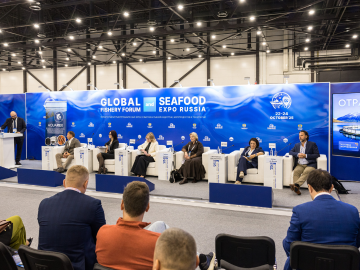
The roundtable "Technological Aspects of Cost-Effective Aquaculture" was held within the framework of AQUA FARM GLOBAL
More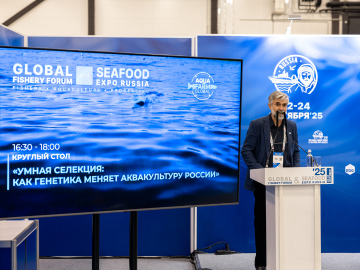
The round table brought together representatives of science and business for an open dialogue
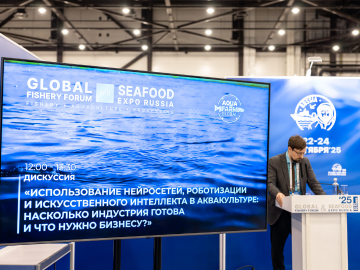
A rich discussion on the use of artificial intelligence in aquaculture and fisheries took place at the round table
More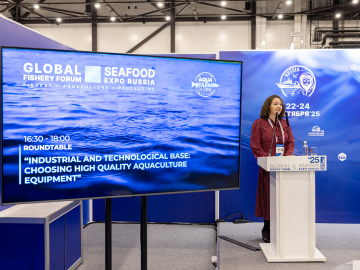
Choosing of high quality aquaculture equipment was discussed at AQUA FARM GLOBAL 2025
More
Kemal Cem Pülten, Editor-in-Chief, Aqua Life of Türkiye Publishing Group
More
What have you already discussed and what's ahead?
More
We are pleased to present an overview of new Russian participants in the special aquaculture and mariculture exposition
More
A few new international exhibitors making their debut at this year’s event
More
Which Chinese practices in aquaculture might be adapted successfully to Russian conditions?
MoreThis website uses , to ensure the best user experience and functionality of the site. By continuing to use this site, you agree to the use of cookies

