


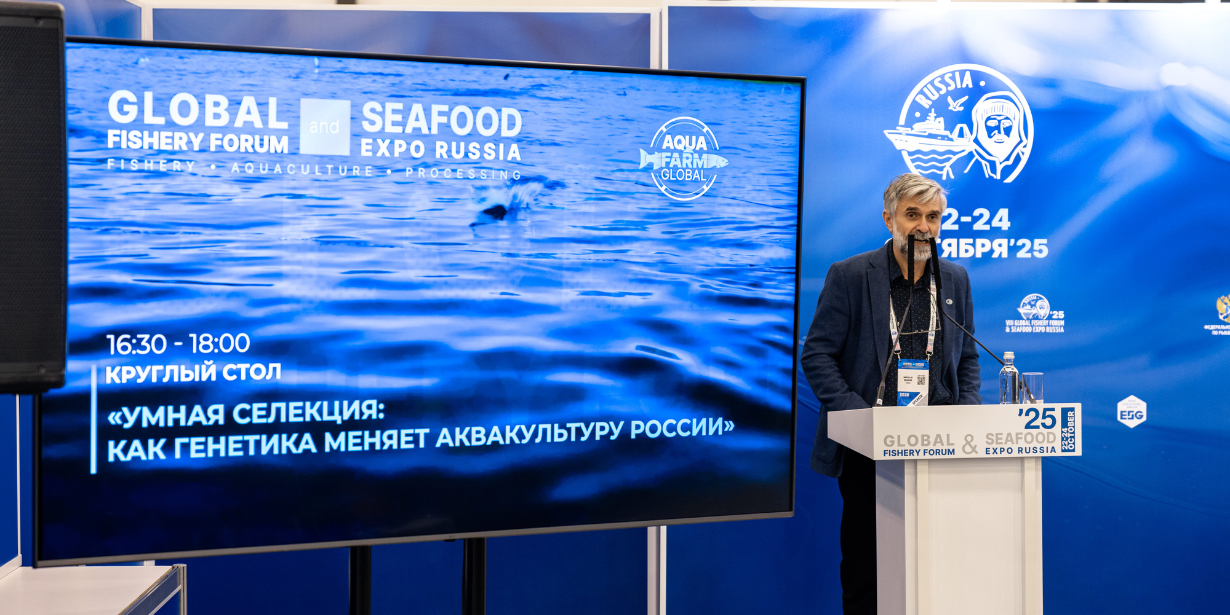
The round table dedicated to selection in aquaculture brought together representatives of science and business for an open dialogue on what tasks the industry faces today and what selection mechanisms are in demand. As part of the discussion on the interaction between breeding and aquaculture, the experts discussed the current mechanisms of breeding, current practices, technological challenges and ways of developing the industry. Participants presented cases and recommendations.
Elena Moiseeva, Director, "Ardon-Fish" Trout Fry Production Company, emphasized the priorities of producers: the speed of fish growth, resistance to diseases, reduction of losses during gutting and improvement of food quality.
According to ee calculations, even with 25% losses, the genetics of rapid growth covers losses, providing a profit of up to 10 million rubles per 100 tons. Moiseeva called for parallel selection on several grounds. A practical example showed that genetically oriented lines with a higher potential growth rate may require more expensive nutrition, but at the same time provide significantly more biomass gains and economic benefits per unit of time compared to standard lines.
Special attention was paid to the quality of planting material Anastasia Stepanova, Deputy General Director of JSC "Plemzavod "Adler", spoke about the shortage of domestic planting material for rainbow trout. "85% of aquaculture in the world uses imported caviar, which creates risks due to diseases and dependence on supplies," she said.
Measures were proposed for the successful development of breeding fish farming in conditions of import substitution. First, to strengthen support for breeding and commercial fish farming, including through the priority provision of subsidies to organizations that grow commercial fish from domestic fish planting material. Secondly, to provide training of highly qualified specialists in the field of breeding and breeding work. It is also important to control the quality and safety of imported fish planting material, and to protect the domestic market - to introduce quotas for trout imports equal to the volumes of domestic production. Finally, it is necessary to intensify scientific research in the field of genomic selection of salmon fish, which will increase the competitiveness of the industry and ensure sustainable development.
Alexander Boborykin, Junior Researcher, Laboratory of Genetic Technologies in Agriculture and Aquaculture, spoke about the development of the reliability of the origin of parental forms of fish for the purpose of their more effective selection. L. K Ernst. "The development allows you to accurately identify the origin and control the purity of the species, reducing the cost of analysis," he explained. The system includes multiplex panels that reduce analysis time and a digital fish passport with genetic data.
During the discussion, assessment methods were discussed and emphasis was placed on the need for large-scale databases. The complexity of factors was discussed: temperature, salinity, concentrations of substances and other parameters of the environment significantly affect the severity of selection advantages, so local adaptation and testing in real conditions of farms are of significant importance.
Yuri Shcherbakov, a Junior Researcher Fellow, laboratory of molecular genetics, All-Russian Research Institue for Farm Animal Genetics (VNIIGZh), reported on the genetic basis of the productivity of the rainbow trout. Studies have revealed markers associated with body weight and growth rate and growth hormone. "Genomic analysis allows you to predict signs at the early stages, increasing the efficiency of selection," he said.
Ekaterina Chernyaeva, Deputy Director, All-Russian Research Institute for Animal Breeding (VNIIPlem), PhD in Biology, focused on genomic selection. "This approach increases the accuracy of selection, reduces costs and accelerates progress," she said. It was noted that for the development of the industry it is extremely important to create our own data quality control tools - both genetic and phenotypic. She called for the professional community to work together to achieve these goals and improve standardization. "It is equally important to introduce some quality control systems for all these results, that is, some interlaboratory exceptional tests, if they take place in the laboratory, all laboratories must give a result that coincides with each other, otherwise it cannot be trusted."
It is also necessary to form training and information dissemination systems among breeders so that they can clearly understand how data is collected and processed, what the numbers received mean and how to use them in practice.
The technologies for obtaining triploid trout were highlighted in his report by Nikolai Muge. Triploid fish - with three sets of chromosomes - are characterized by sterility, rapid growth, resistance to stress and diseases, as well as high metabolism. Hormonal methods are used to obtain same-sex offspring, but they are prohibited by Russian legislation due to the inclusion of drugs in the list of potent substances.
The country does not have legal access to drugs for the creation of reverse males, while the world practice is moving towards the use of gene editing methods (CRISPR/CAS) that do not contain foreign genes, but the regulatory framework in the Russian Federation hinders their implementation. "CRISPR allows you to quickly improve signs such as disease resistance or growth. But without changing the legislation, the selection will remain static," he stressed.
The participants of the discussion at the end of the round table outlined a roadmap: to start with a clear definition of the requirements for planting material for manufacturers, to expand field testing and data collection, to use genomic and digital technologies more actively for selection and monitoring, as well as to combine the efforts of business, science and regulators to create sustainable breeding programs.
The event was held as part of the AQUA FARM GLOBAL special exposition, organized with the support of Sphere Mediagroup at the Seafood Expo Russia exhibition in St. Petersburg on October 22-24.
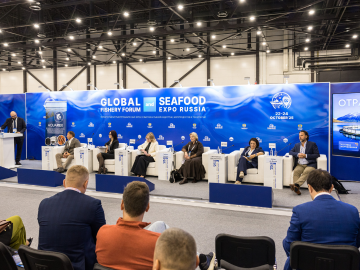
The roundtable "Technological Aspects of Cost-Effective Aquaculture" was held within the framework of AQUA FARM GLOBAL
More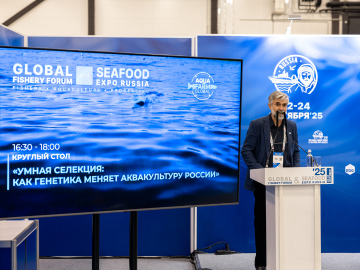
The round table brought together representatives of science and business for an open dialogue
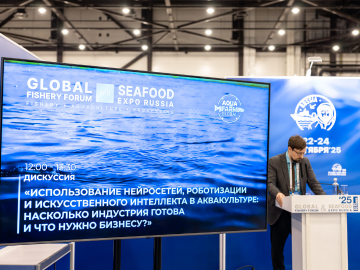
A rich discussion on the use of artificial intelligence in aquaculture and fisheries took place at the round table
More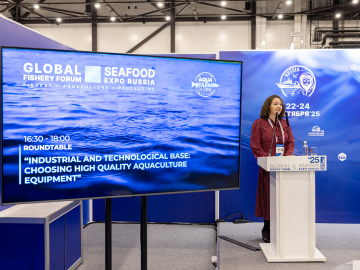
Choosing of high quality aquaculture equipment was discussed at AQUA FARM GLOBAL 2025
More
Kemal Cem Pülten, Editor-in-Chief, Aqua Life of Türkiye Publishing Group
More
What have you already discussed and what's ahead?
More
We are pleased to present an overview of new Russian participants in the special aquaculture and mariculture exposition
More
A few new international exhibitors making their debut at this year’s event
More
Which Chinese practices in aquaculture might be adapted successfully to Russian conditions?
MoreThis website uses , to ensure the best user experience and functionality of the site. By continuing to use this site, you agree to the use of cookies

