


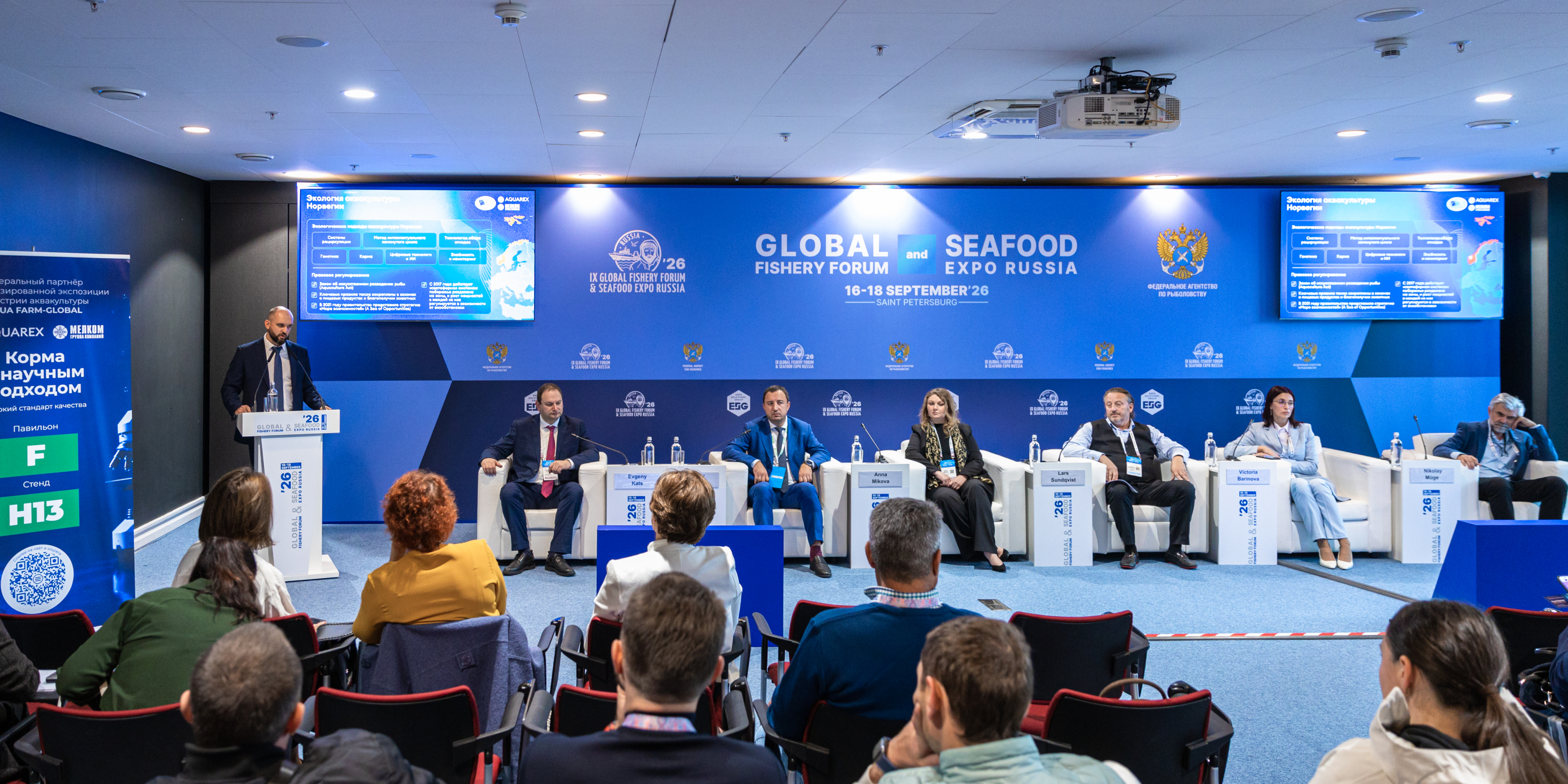
Russian aquaculture has reached a stage where further growth requires not only higher production volumes but also a domestic technology base. At the Aqua Farm Global roundtable "The future of Russian aquaculture: ecology, feed and genetic sovereignty through the lens of international experience", experts discussed environmental regulation, seed stock, selective breeding, feed independence and emerging biotechnologies. The discussion focused on practices from China, Chile and Norway and how they could be adapted to Russian conditions.
Evgeny Kats, Director of the Department for Regulation in Fisheries and Aquaculture at the Ministry of Agriculture of the Russian Federation, noted that environmental responsibility should be shared by government and fish farms. He said producers themselves have a strong interest in complying with environmental requirements, as deteriorating water quality increases animal health risks and can lead to conflicts with local communities.
Victoria Barinova, Head of the Aquaculture Department at VNIRO, stressed that environmental impacts vary depending on the region and the concentration of production facilities, meaning there is no single solution suitable for every farm. Russia already has a basic regulatory framework in place, but it needs to be updated in light of practical experience.
According to moderator Roman Artemov, Russia remains largely self-sufficient in carp and sturgeon production. However, its dependence on imported seed stock remains significant for salmonids, reaching nearly 100% for Atlantic salmon and up to 90% for trout.
Nikolay Müge, Head of the Department of Genetics and Genomic Selection at VNIRO, suggested looking to Chile's experience. The country initially relied on imported seed stock while simultaneously establishing its own selective breeding centres and broodstock populations. Once this domestic base had been developed, Chile restricted imports of fertilised eggs.
Müge believes that Russia could follow a similar path: use genetic material from around the world, adapt the best strains to domestic conditions and develop its own selective breeding and genetics infrastructure in parallel. VNIRO is already collecting samples from trout strains around the world and building a database for further selection, including for disease resistance.
Anna Mikova, Head of the Department of Science and Aquaculture at the Federal Agency for Fisheries, reported that the selective breeding and genetics centre in Karelia is currently being commissioned. The facility is expected to become operational by the end of 2026, with broodstock introduced in the first or second quarter of 2027.
She noted that genetics and selective breeding are only part of the task. Achieving results on an industrial scale also requires sufficient space, water resources and production capacity to scale up new developments. A wider network of such centres should only be considered once the results of the Karelia project have been assessed.
The production of sex-reversed males remains a separate regulatory issue. Nikolay Müge noted that one of the barriers to using this technology is the legal status of methyltestosterone, which is listed as a potent substance. Evgeny Kats stressed that resolving the issue would require coordination between government agencies. According to Anna Mikova, this work is already under way.
Norway's experience was presented by Lars Sundqvist, Deputy General Director for Aquaculture at MELKOM Group JSC. He explained that the country's current system had developed over several decades, with significant government involvement in infrastructure, research funding and market regulation.
In Norway, licensing applies not only to commercial fish farming but also to the production of seed stock. Government and research institutions have supported studies of nutrition, disease, vaccination, genetics and selective breeding.
Juvenile production technologies have also evolved. Adjustments to temperature and lighting conditions, feeding practices and smoltification techniques have substantially shortened the time required to produce smolt.
Dmitry Yakimov, CEO of MELKOM-Market LLC, reported rising prices for fishmeal, fish oil and other feed ingredients. He noted that Russia's existing aquafeed production capacity may already exceed domestic demand, making exports increasingly important for the industry's further development.
One emerging area is the supply of extruded carp feed to Uzbekistan. According to Yakimov, Russian producers can compete with international companies on quality. However, the cost of raw materials and financing limits their price competitiveness in some markets.
Participants discussed the use of insect-based ingredients and other alternative protein sources. Alexey Yapontsev, CEO of Saltra LLC, noted that the nutritional value and production cost of such ingredients depend directly on the substrate used to raise the larvae. When waste and by-products from food production are used, their composition and availability must be taken into account, as these factors determine both the characteristics and the cost of the resulting protein.
Lars Sundqvist added that Norway is developing solutions based on insects and microbial protein. However, their industrial use also requires careful assessment of nutritional value, technological limitations and production economics.
Nikolay Müge proposed distinguishing between the biological safety of GMOs and technological dependence on imported raw materials and genetic material.
He also outlined the potential of genome editing. Unlike conventional transgenic modification, this technology introduces targeted changes directly into an organism's genome. VNIRO is already conducting experimental research into genome editing in fish.
According to Müge, similar research is under way in other countries. China has developed carp strains with modified traits, although the potential for their commercial use also depends on the regulatory framework.
The discussion demonstrated the close links between environmental requirements, selective breeding, seed stock, feed production and the regulation of new technologies. To support further growth, Russian aquaculture must simultaneously improve the environmental performance of farms, develop a domestic breeding base, reduce biological risks associated with seed stock and strengthen the supply of raw materials for feed production.
International experience offers several different models. Norway has focused on long-term support for research and effective regulation, Chile on using global genetic material while building its own selective breeding infrastructure and China on scaling up technological solutions.
For Russia, the main priority is to connect scientific developments with an effective regulatory framework, production infrastructure and real market demand.
September was an important month for Russia's fisheries sector
More
At the Aqua Farm Global roundtable "Selective breeding and genetics in aquaculture: a breakthrough strategy for technological independence"
More
Russian aquaculture has reached a stage where further growth requires not only higher production volumes but also a domestic technology base
More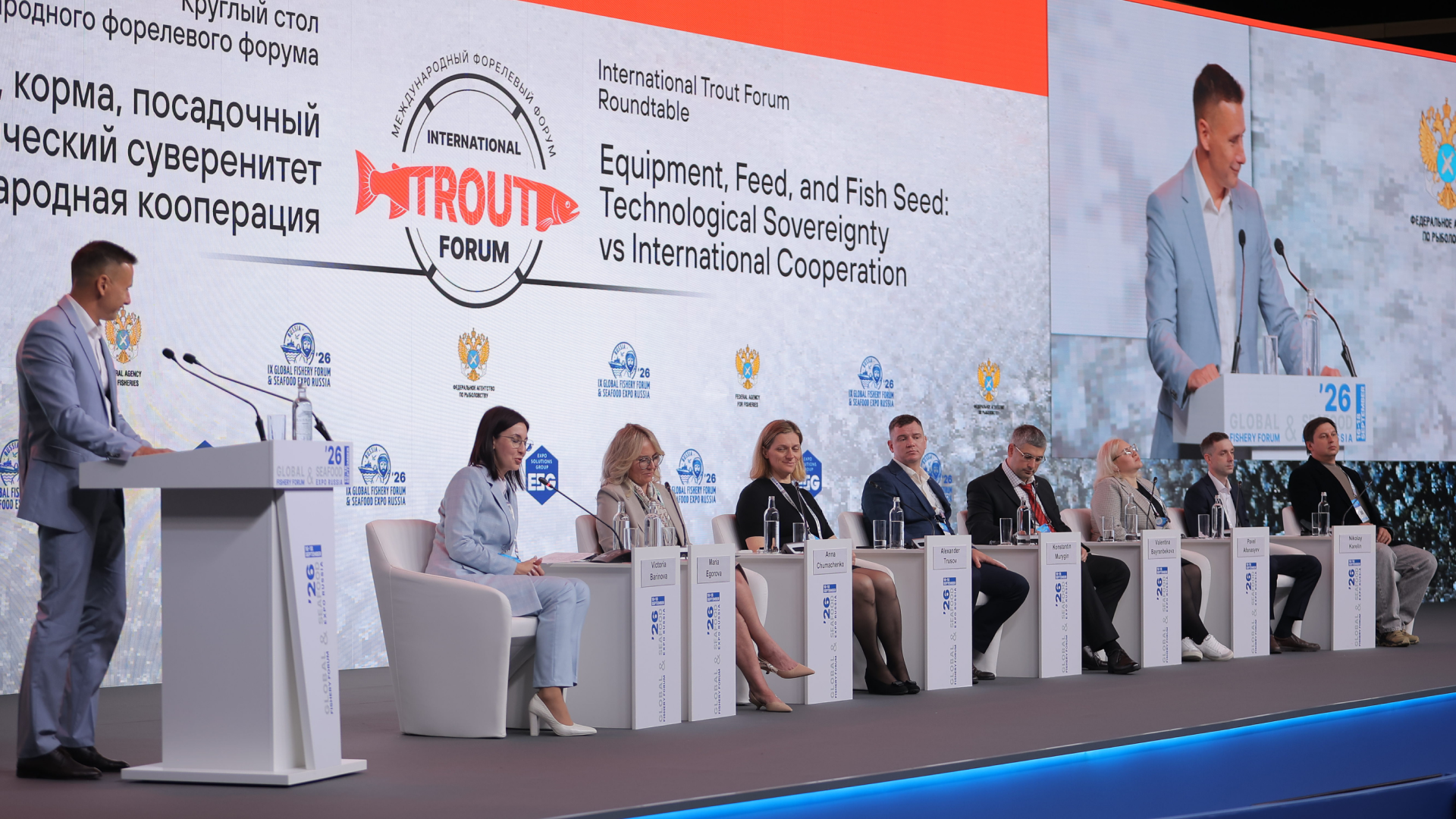
At the International Trout Forum roundtable "Equipment, feed and fish seed: technological sovereignty vs international cooperation", representatives of research, business and industry organisations discussed the main constraints on the development of trout farming
More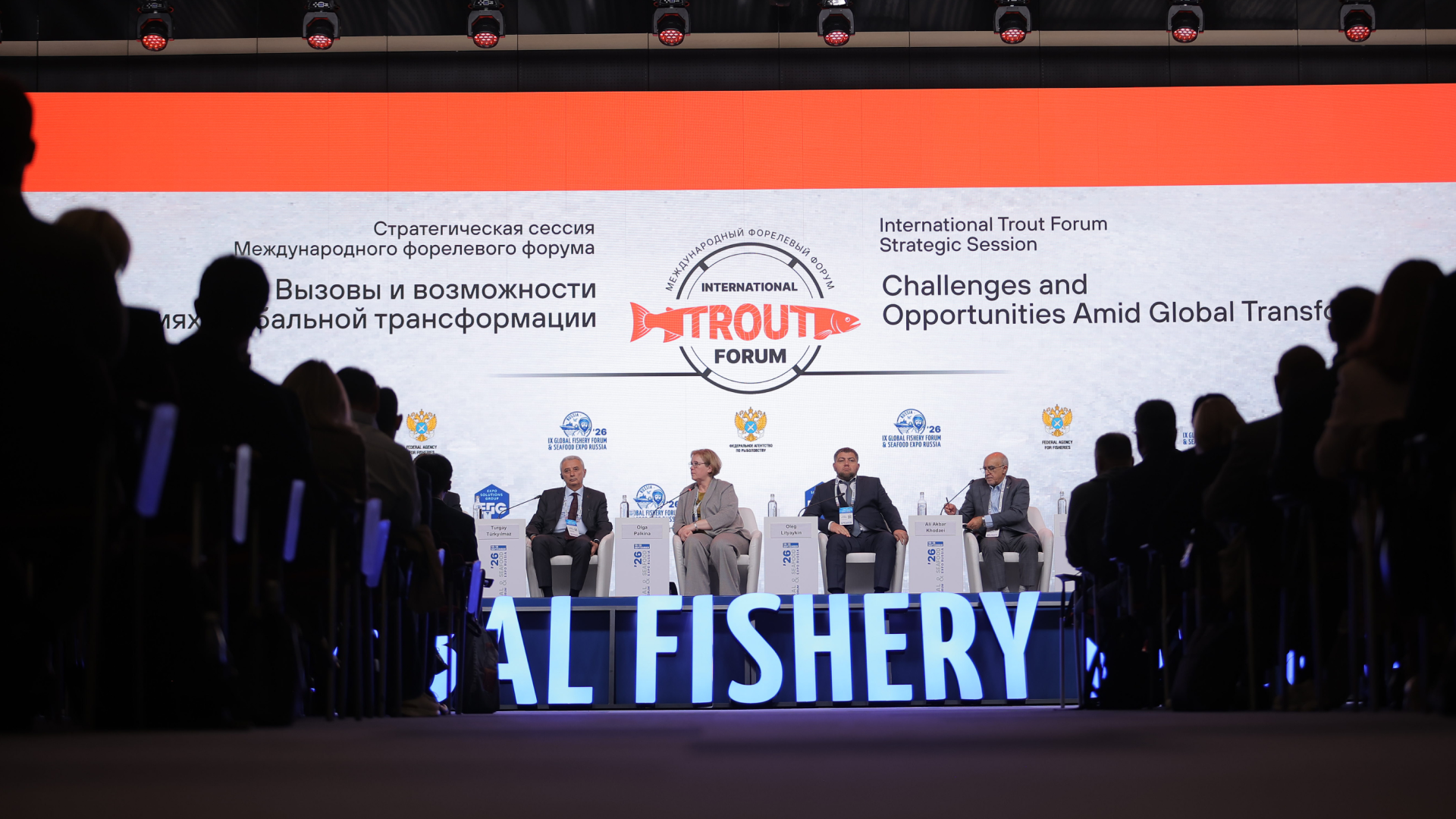
The International Trout Forum, held as part of the IX Global Fishery Forum & Seafood Expo Russia 2026, addressed selective breeding, feed, veterinary safety and new models for industry development
More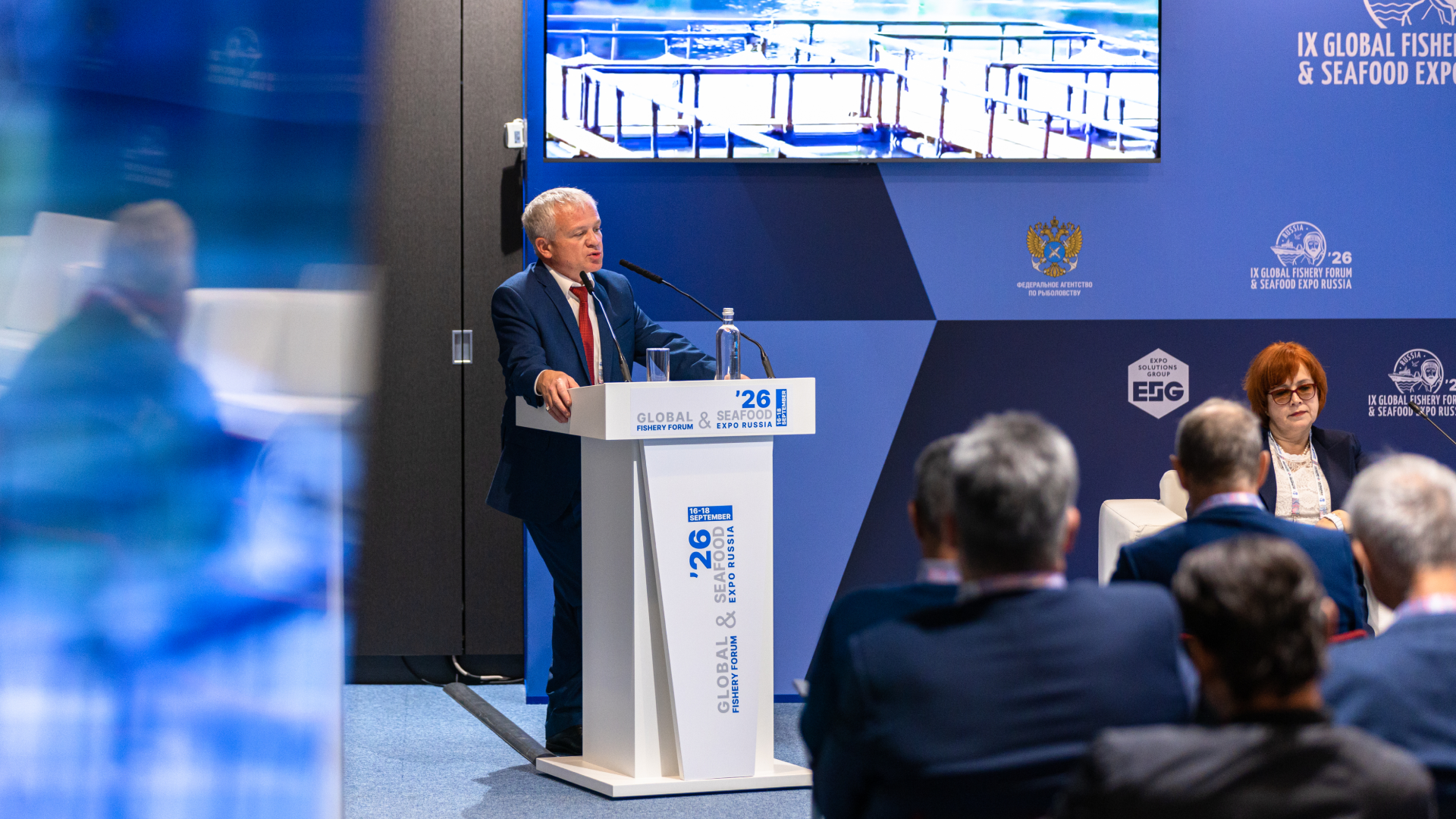
The Aqua Farm Global presentation "Current technologies and services for cage fish farms: fr om equipment selection to efficient operation"
More
JSC "Rybnyye Korma" – a major Russian producer of feed for industrial aquaculture
More
One of Russia’s leading producers of feed for industrial aquaculture will serve as the General Partner of the Aqua Farm Global.
More
From 16 to 18 September, St. Petersburg will host the year's leading industry event
More
Joint pavilion of fisheries companies from the Kyrgyz Republic
MoreThis website uses , to ensure the best user experience and functionality of the site. By continuing to use this site, you agree to the use of cookies

