


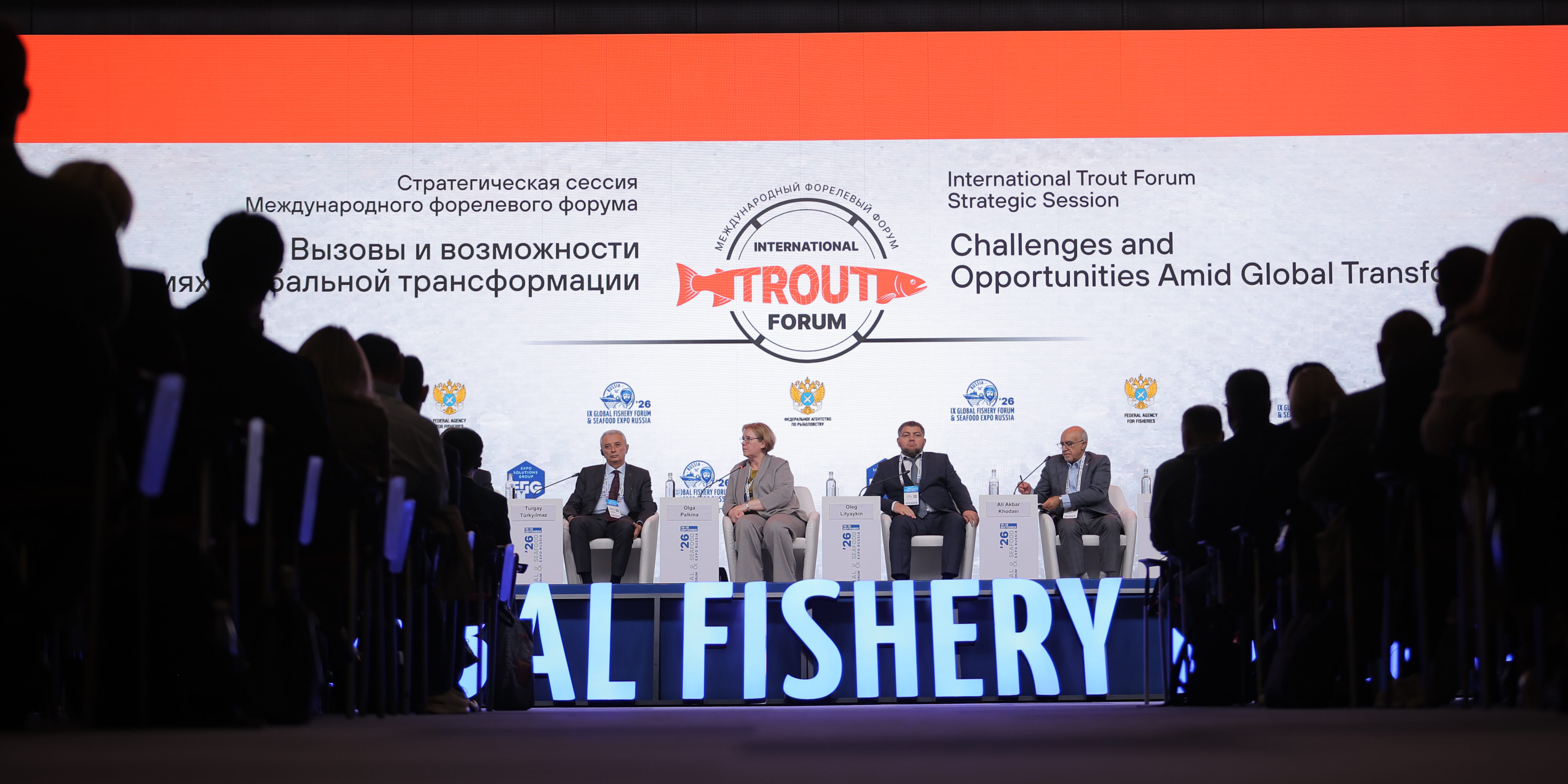
The International Trout Forum, held as part of the IX Global Fishery Forum & Seafood Expo Russia 2026, addressed selective breeding, feed, veterinary safety and new models for industry development.
Russian trout farming has reached a stage where further growth will depend not only on increasing production volumes but also on improving the efficiency of the entire value chain. On 17 September, representatives of government, business and the research community gathered at the International Trout Forum strategic session "Challenges and opportunities amid global transformation" in St Petersburg. They discussed the development of a domestic selective breeding base, the localisation of feed and vaccine production, technological upgrades at fish farms and the transition fr om raw materials to higher-value products.
Reducing the industry's dependence on imported genetics was one of the central topics. Igor Zubarev, First Deputy Chair of the Federation Council Committee on Agriculture and Food Policy and Environmental Management, noted that Russian seed stock production has grown considerably in recent years. The next stage, however, will require advances in selective breeding and genetics.
"Egg production has still not been fully localised. We need to join forces and begin systematic selective breeding," Igor Zubarev said. According to him, Norway's experience shows that a coordinated breeding program can significantly improve aquaculture productivity. Karelia is already developing its own capabilities in this area. Petrozavodsk State University has established trout broodstock and replacement stock populations of around 200 and 300 fish respectively. The region expects to register its own Karelian trout breed within the next few years.
Karelia focuses on the economics of every kilogram
Olga Palkina, Minister of Agriculture and Fisheries of the Republic of Karelia, noted that the region, which ranks first in Russia for trout production, now needs to reconsider how efficiency is measured.
"To maintain our competitive advantage and move forward, we need to move away from evaluating performance by tonnage and focus on the economics of every kilogram produced," she said.
Olga Palkina identified several priorities for the region: breeding seed stock with specific commercially valuable traits, improving farming and processing technologies, increasing feed efficiency, developing veterinary services and updating the regulatory framework. Competitiveness is now determined not by an individual company but by the entire production ecosystem, from genetics and feed to farming, processing, logistics and the market. Feed prices alone are therefore no longer a sufficient indicator. Farms must also consider the cost of each kilogram of growth, fish survival rates and the stability of production results.
From feed to genetics and veterinary safety
Technological independence was another major topic at the forum. Igor Zubarev reported that trout farms in north-western Russia completed their transition to domestically produced feed in 2025. He estimated that Russian production capacity is already sufficient to meet the industry's feed requirements in full, although some issues remain with individual ingredients and premixes.
Genetics may become the next limiting factor. Karelia plans to develop its own breeding strains adapted to specific farming conditions and resistant to disease.
Veterinary safety is also becoming an important element of technological independence. Alexander Kononov, Deputy Director for Production at a branch of the Federal Center for Animal Health and Doctor of Veterinary Sciences, discussed the development of Russian vaccines for aquaculture.
He said vaccination should be regarded not only as a substitute for imported products but also as part of a systematic approach to disease prevention, reducing losses and limiting dependence on antibiotics. Veterinary safety, however, cannot be achieved through vaccines alone. Alexander Kononov stressed that many risks are associated with the movement and transportation of infected seed stock. An effective protection system must therefore combine diagnostics, monitoring, prevention and vaccination with environmental controls covering hydrochemical parameters, feed resources and the epizootic situation.
Automation is becoming part of aquaculture economics
Technological modernisation is another driver of production efficiency. Oleg Lityaykin, Managing Director of the Center for Industry Expertise at Rosselkhozbank, noted that the global market for aquaculture monitoring and automation systems was valued at approximately $1.6 billion in 2025. It could exceed $4 billion over the next decade, with average annual growth of around 9.5%.
This growth is being driven by rising seafood demand, labour shortages and stricter requirements for environmental safety, certification and product traceability. In Russia, however, automation technologies are still being adopted on a limited basis despite the wider use of digital solutions in other parts of the agricultural sector.
The fastest-growing technologies in aquaculture include water parameter monitoring, computer vision, automated feeding and recirculating aquaculture systems. According to Oleg Lityaykin, feed accounts for 40–60% of production costs depending on the fish species. Feeding automation therefore has a direct impact on production economics, while cameras and digital systems can improve feed conversion efficiency by 5–12%. The use of connected devices is also expanding.
International experience
International case studies formed an important part of the forum. Turgay Türkyılmaz, Director General of Fisheries and Aquaculture at the Ministry of Agriculture and Forestry of the Republic of Türkiye, reported that the country's fish production reached 1.037 million tonnes in 2025, of which around 577,000 tonnes came from aquaculture. Farmed fish therefore accounted for approximately 60% of total production.
Regional specialisation has been one of the drivers of this growth. Türkiye plans production volumes by region, taking into account natural conditions and the economics of farming different species. Small and medium-sized businesses, cooperation between producers and government support all play a significant role. The country also presented the development of "Turkish salmon", a product intended in part for export markets. According to Türkyılmaz, Russia is one of the most important markets for Turkish fish products.
International experience also showed that even major trout producers face technological dependence. Ali Akbar Khodaei, Secretary General of the Iran Fisheries Production and Trading Union, said that Iran produces around 250,000 tonnes of trout annually but has to import approximately half of its seed stock.
Current trout exports to Russia amount to around 5,000 tonnes per year, while the Russian market remains one of the potential areas for further export growth. Iranian producers have also had to adapt their products to Russian requirements for size, colour and other characteristics.
China's experience demonstrated a different level of technological integration. According to Xu Gefeng of the Heilongjiang Fisheries Research Institute at the Chinese Academy of Fishery Sciences, Chinese rainbow trout production reached around 58,000 tonnes in 2025. He identified land-based and hybrid land-sea farming models, specialised vessels and whole-genome technologies for selective breeding and seed stock production among the most promising areas for development.
The market is moving from raw materials to finished products
The business discussion demonstrated that production growth alone is not enough to develop the market. Konstantin Klinov, Commercial Director of PJSC Inarktika, noted changes in the structure of Russia's salmonid market.
According to his data, Russian farms produced around 74,000 tonnes of trout in 2025, an increase of 3% year on year. Imports, meanwhile, rose substantially: trout supplies from Türkiye grew from 5,000 tonnes in 2018 to more than 60,000 tonnes in 2025.
The products offered to consumers are also changing. Data presented by Konstantin Klinov showed that sales of trout steaks have risen by 83% in recent years, fillet sales by 57% and sales of lightly salted trout by 19%. This reflects demand for products that require no additional cutting or preparation and allow producers to create added value at the processing stage.
"Consumers are not paying for a kilogram. They are paying for a solution," Konstantin Klinov said.
He added that the industry's next stage of development would involve standardised, fixed-weight products for retail, prepared food, foodservice and online sales channels.
The next stage is to build an industrial ecosystem
Vladimir Zhadnov, Co-Founder of Ostrov LLC, proposed taking a broader view of the industry's development. He cited North Ossetia, wh ere trout production increased from 80 tonnes to more than 10,000 tonnes within several years.
In his view, the next major step will require more than a number of successful individual farms. Research, business and government will need to come together around shared infrastructure covering genetics, feed, veterinary services, equipment, processing and logistics.
"The next step is much more difficult. It is one thing to increase production from 80 tonnes to 10,000 tonnes, but quite another to move from tens of thousands to hundreds of thousands of tonnes," Vladimir Zhadnov said.
As a long-term objective, he identified the potential to produce an additional 150,000 tonnes of salmonids in Russia. He also noted that the development of trout farming creates demand not only for farming capacity but also for feed production, genetics, veterinary products, equipment, processing and logistics.
While the previous stage of trout farming development focused primarily on increasing production and replacing imports, the next stage will require a different set of performance indicators. These include the cost of each kilogram of growth, feed conversion, survival rates, genetic potential, disease resistance, the level of automation and downstream processing costs.
The industry's competitiveness will therefore depend increasingly not on any single technological solution but on how effectively genetics, feed, veterinary services, equipment, digital systems and processing work together as a single production chain.
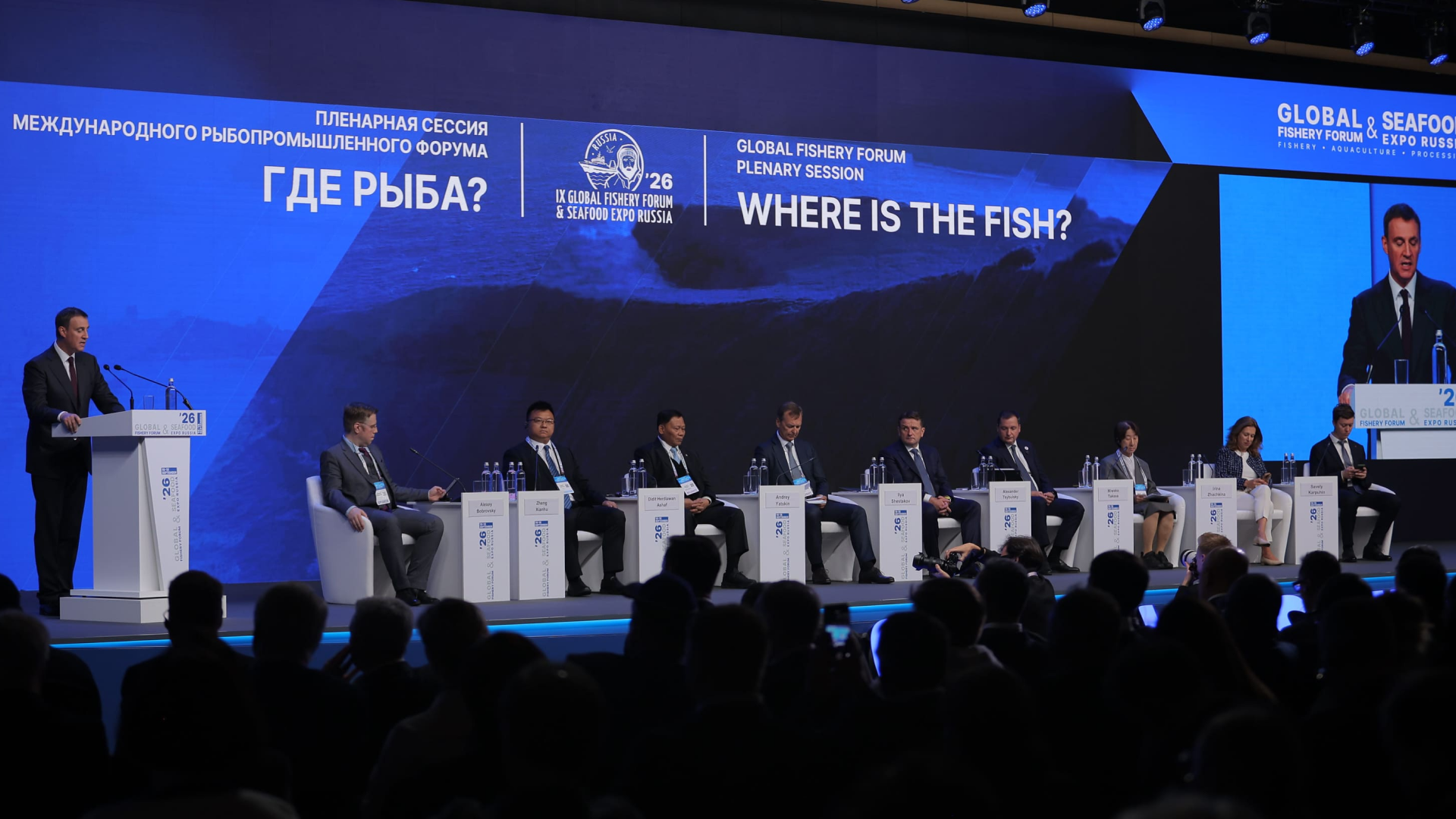
September was an important month for Russia's fisheries sector
More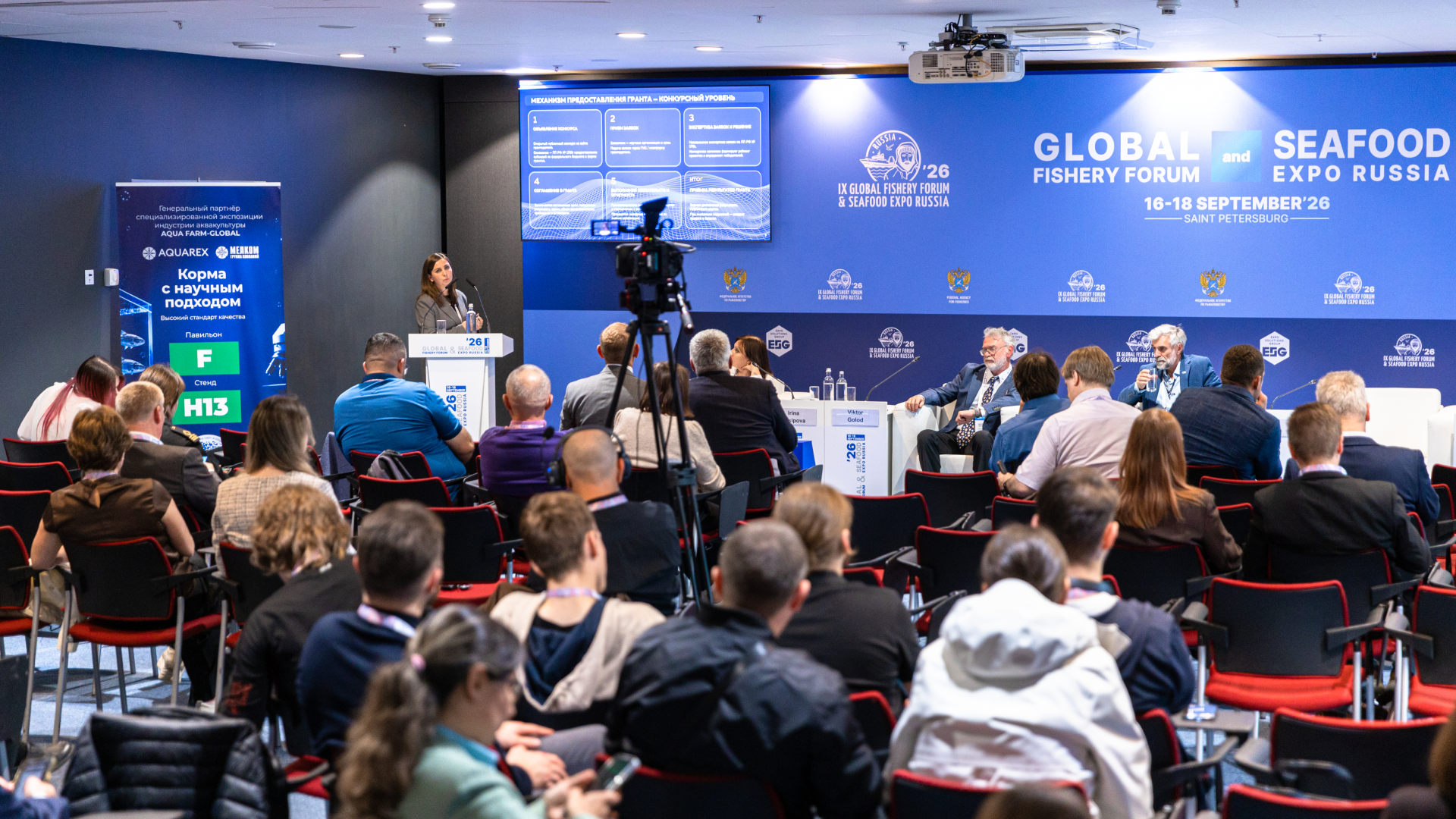
At the Aqua Farm Global roundtable "Selective breeding and genetics in aquaculture: a breakthrough strategy for technological independence"
More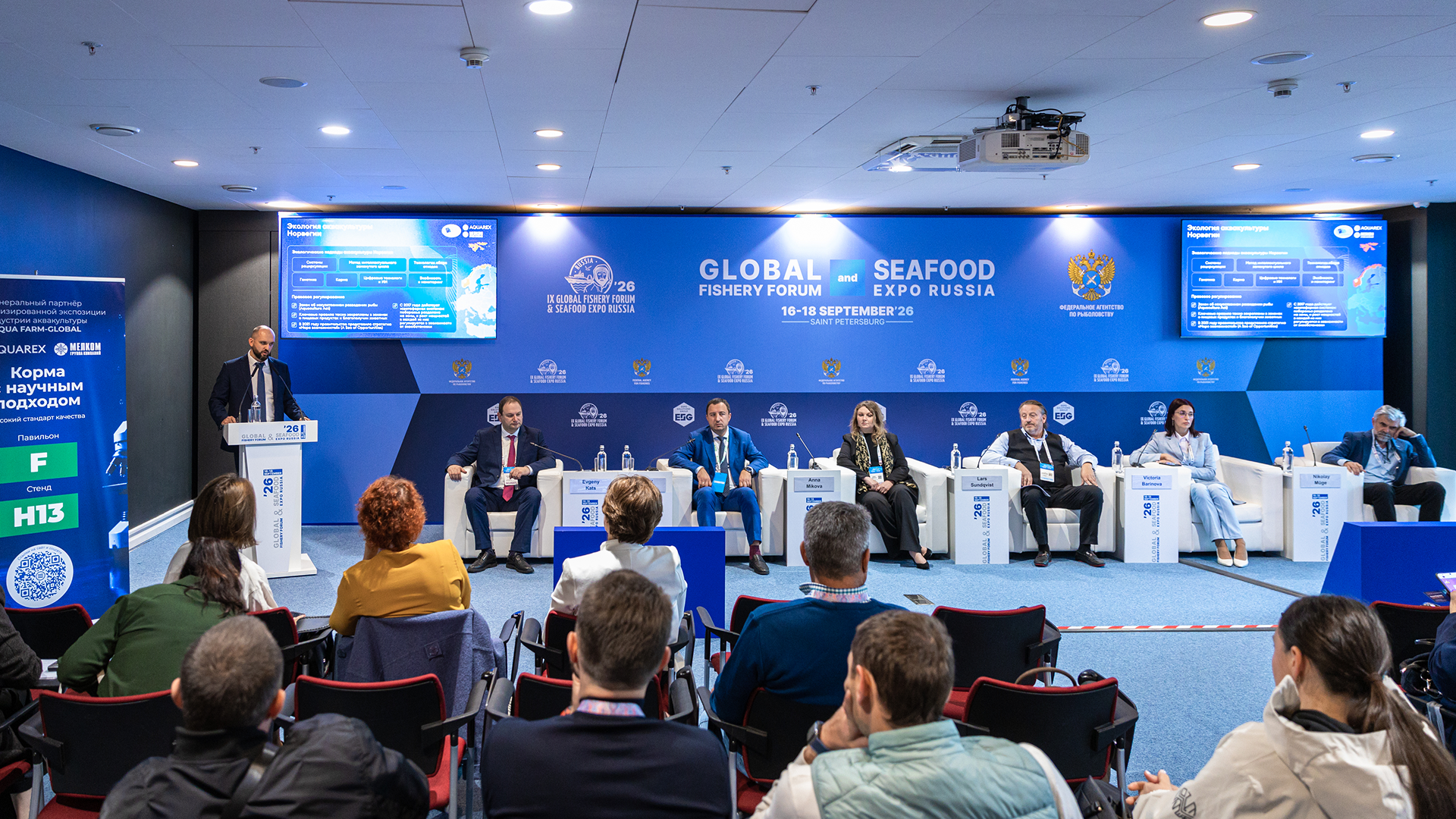
Russian aquaculture has reached a stage where further growth requires not only higher production volumes but also a domestic technology base
More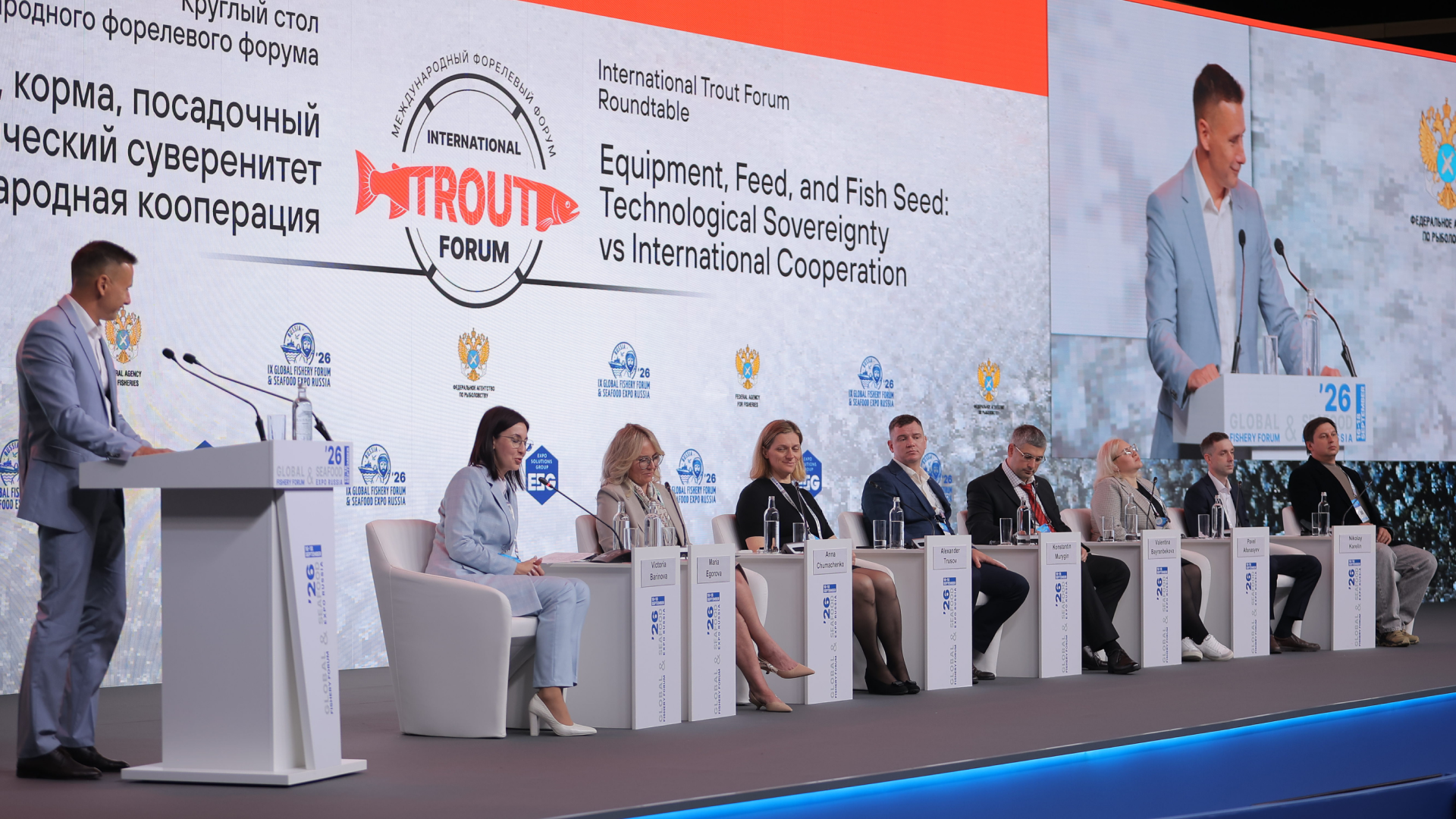
At the International Trout Forum roundtable "Equipment, feed and fish seed: technological sovereignty vs international cooperation", representatives of research, business and industry organisations discussed the main constraints on the development of trout farming
More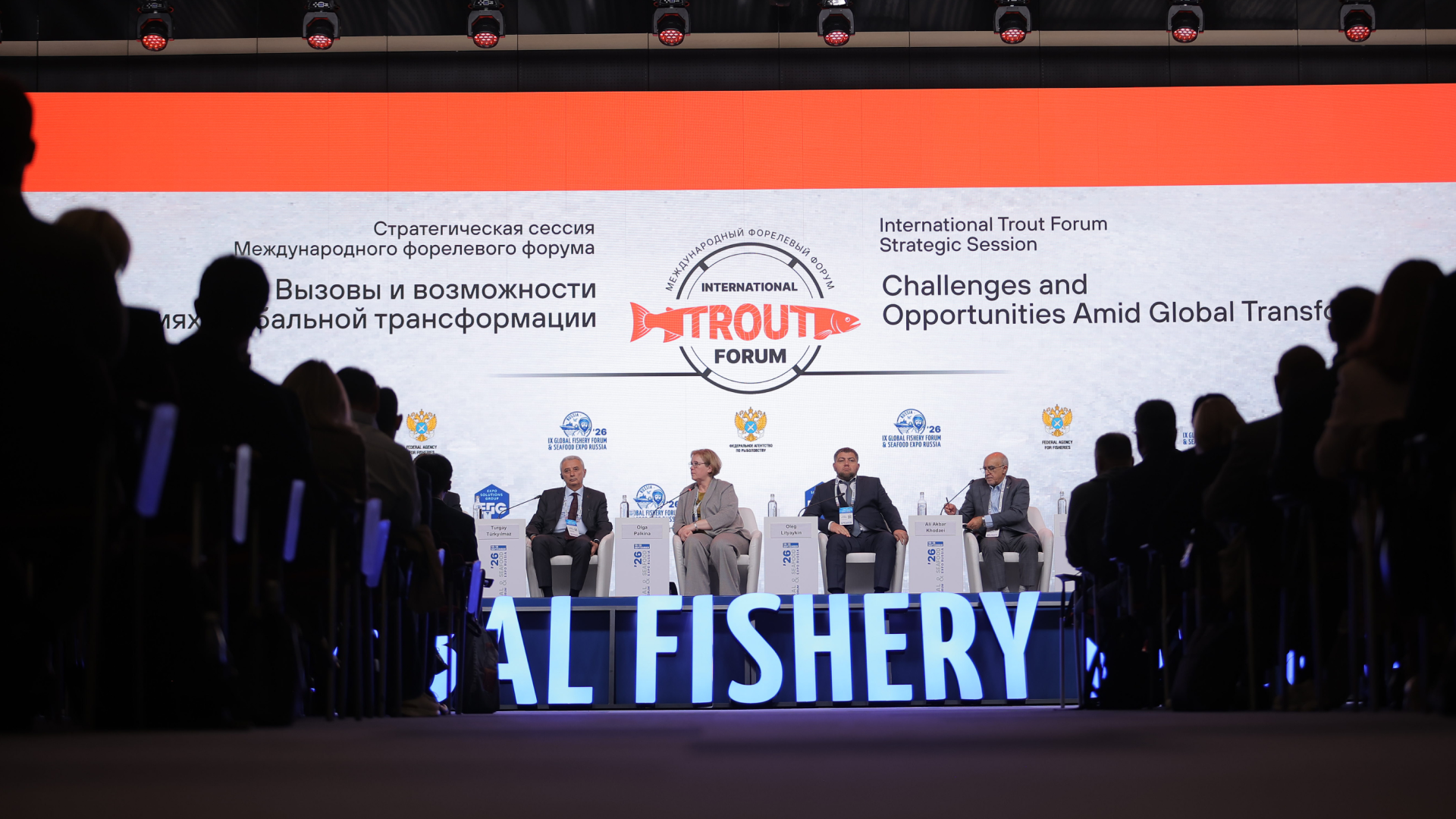
The International Trout Forum, held as part of the IX Global Fishery Forum & Seafood Expo Russia 2026, addressed selective breeding, feed, veterinary safety and new models for industry development
More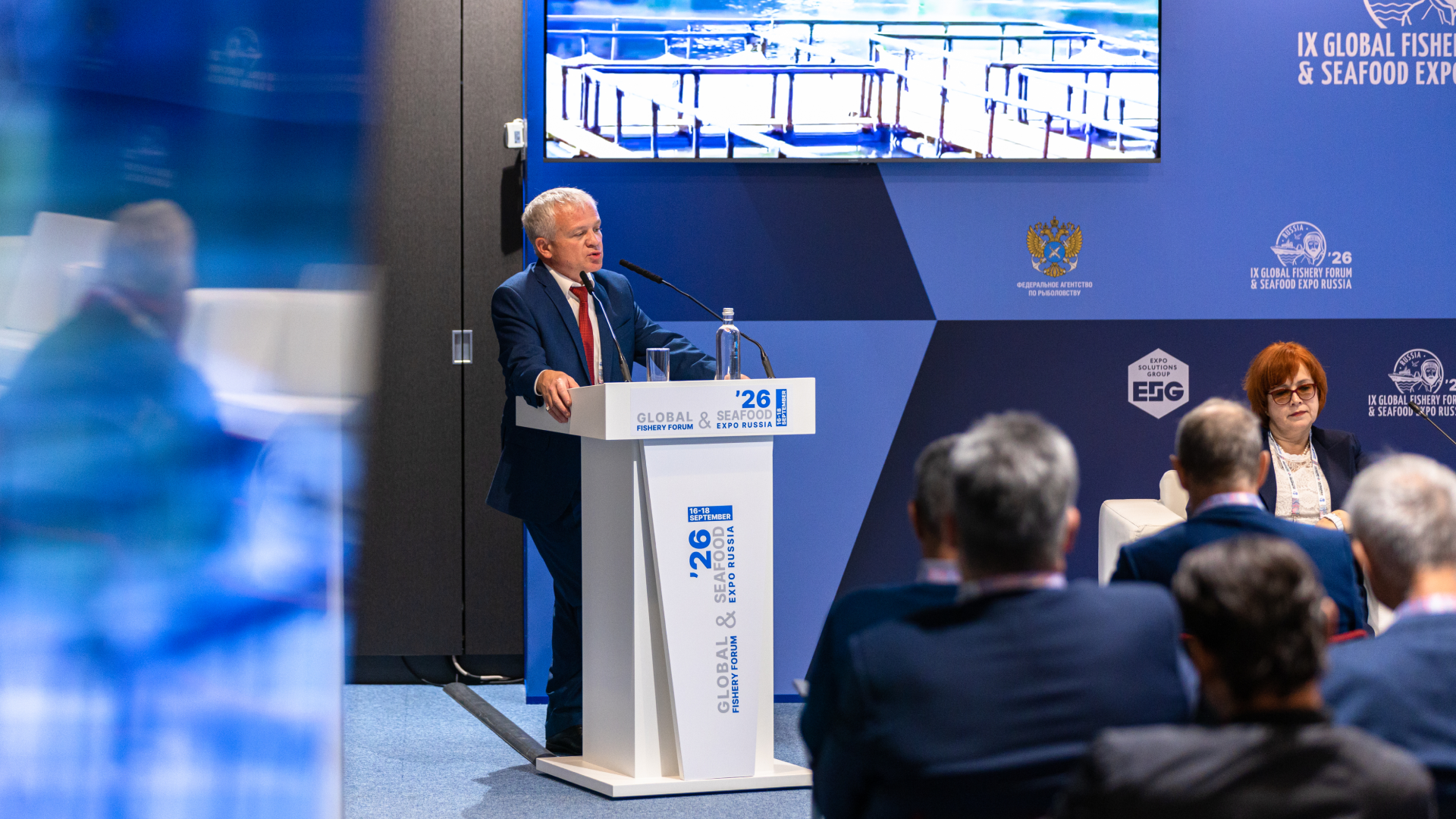
The Aqua Farm Global presentation "Current technologies and services for cage fish farms: fr om equipment selection to efficient operation"
More
JSC "Rybnyye Korma" – a major Russian producer of feed for industrial aquaculture
More
One of Russia’s leading producers of feed for industrial aquaculture will serve as the General Partner of the Aqua Farm Global.
More
From 16 to 18 September, St. Petersburg will host the year's leading industry event
More
Joint pavilion of fisheries companies from the Kyrgyz Republic
MoreThis website uses , to ensure the best user experience and functionality of the site. By continuing to use this site, you agree to the use of cookies

