The cost of raising a kilogram of fish depends on feed prices and consumption, the quality of the stocking material, and growing conditions. Revenue depends on whether the fish goes to market whole, as fillets, or as a prepared product. Discussions at Aqua Farm Global 2026 focused on the practical decisions behind those figures, fr om farm equipment and the economics of trout production to the development of breeding programs in Russia.
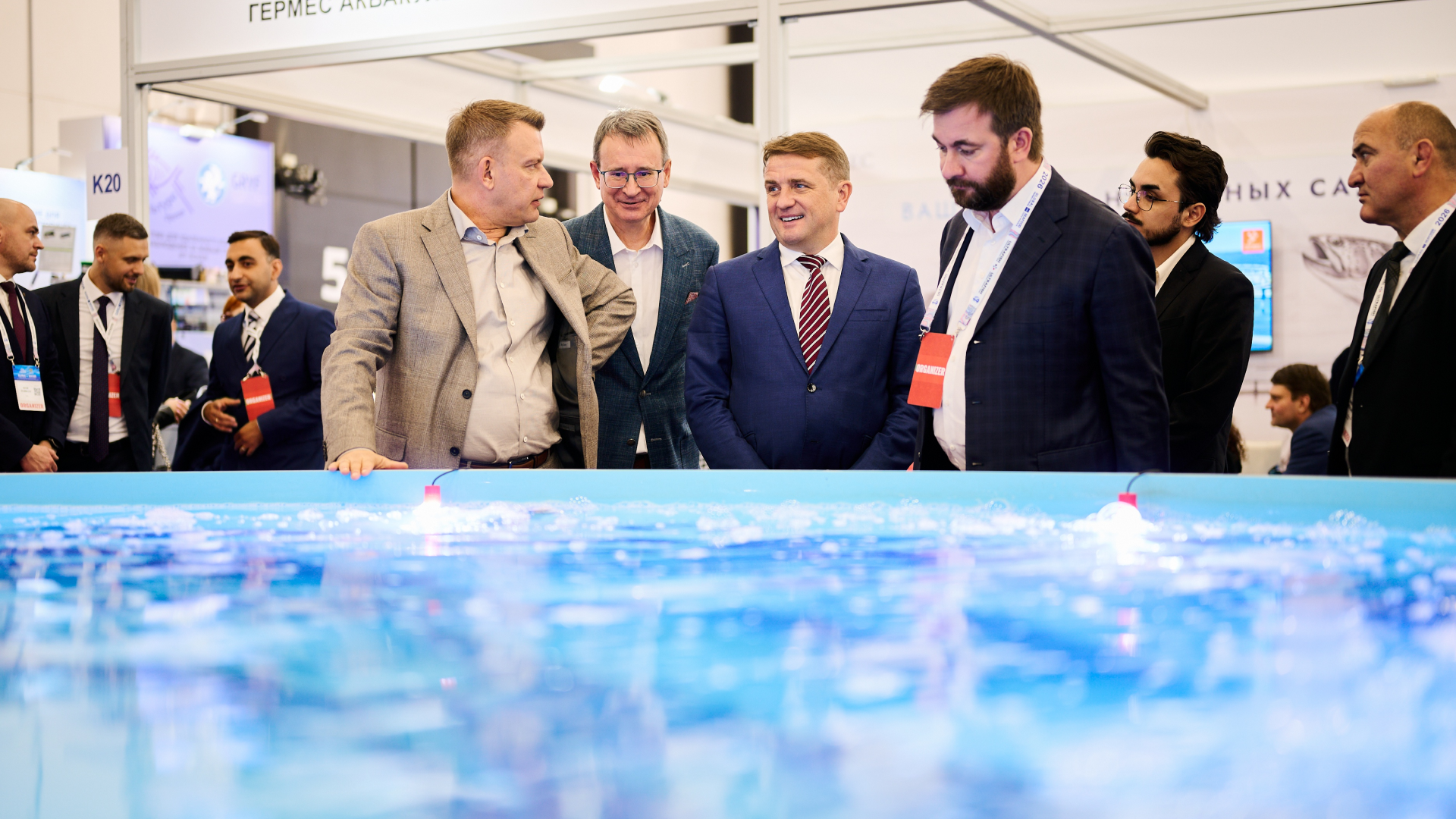
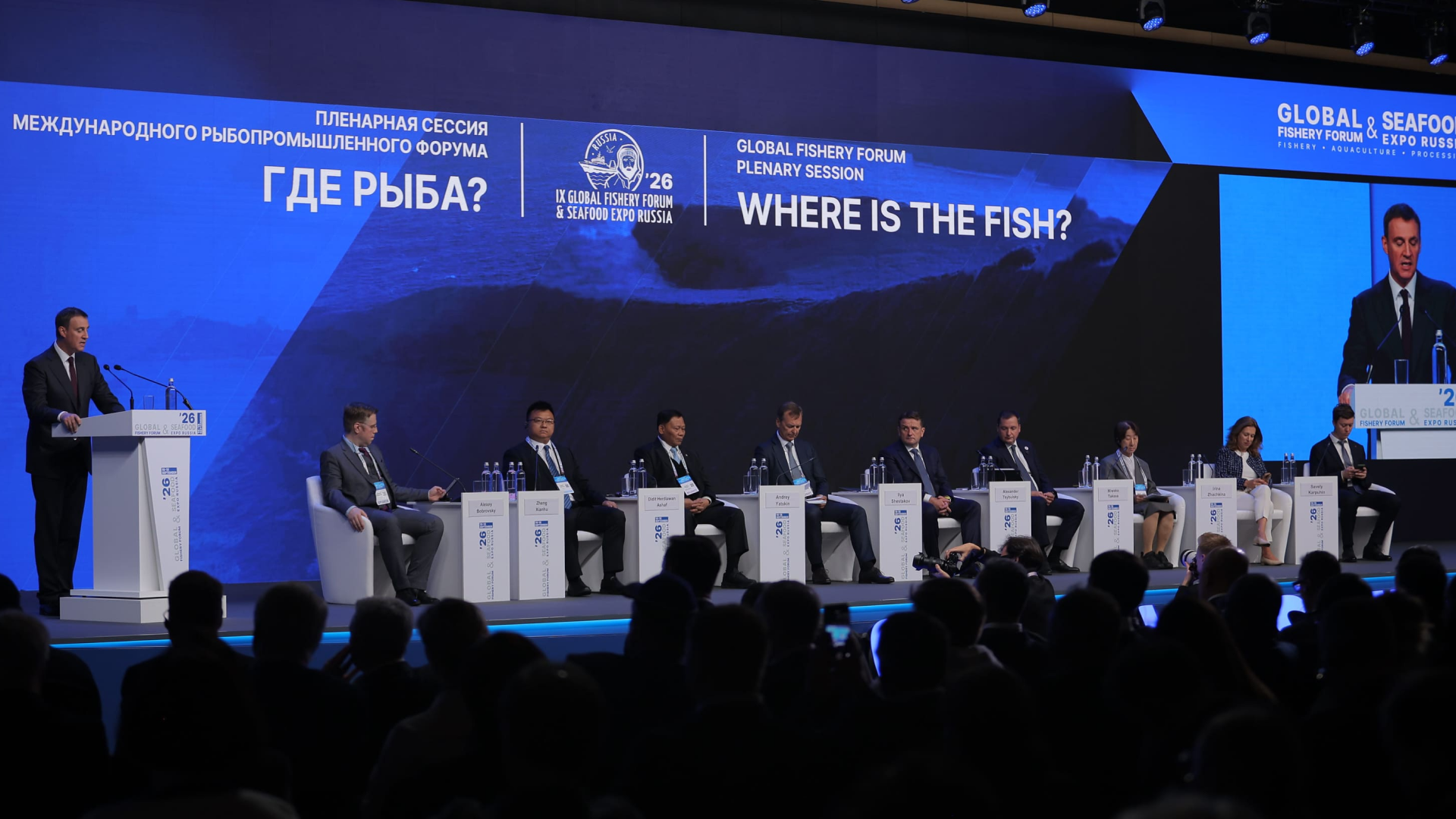
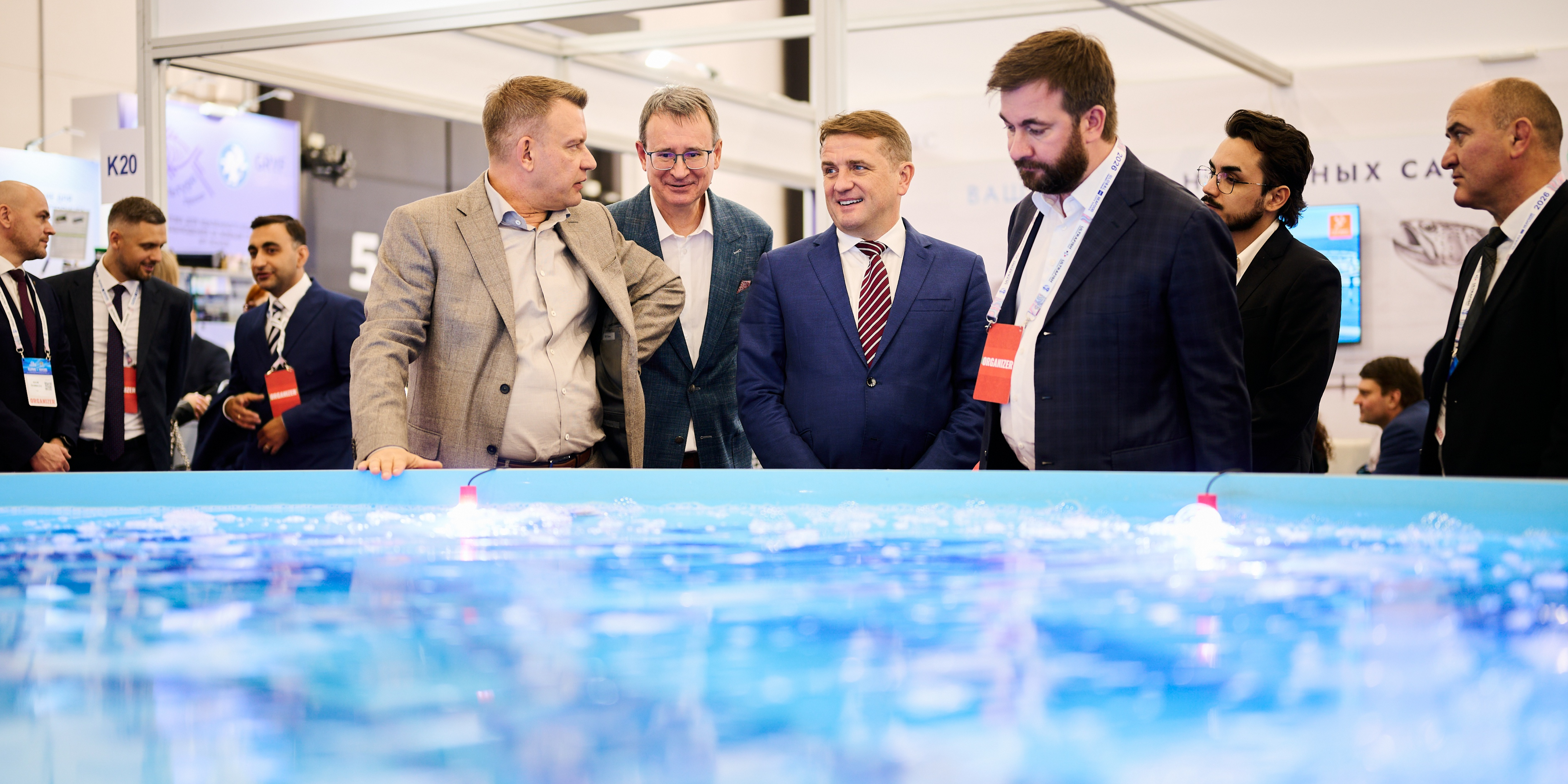
The special exposition took place from September 16 to 18 in St. Petersburg as part of the IX Global Fishery Forum & Seafood Expo Russia. It drew more than 9,000 industry professionals, and more than 80 exhibitors showcased their products and solutions across 3,000 m². Two working recirculating aquaculture systems (RAS) at the center of the exposition gave visitors a chance to see equipment from participating companies in operation.
What drives the cost of raising fish
Feed cost per kilogram of weight gain depends on how much the feed costs and how much the fish consume. Ingredient prices are a major factor in the cost of feed. At a roundtable on the future of Russian aquaculture, MELKOM-Market CEO Dmitry Yakimov noted that fishmeal and fish oil had become more expensive. For farms, that makes it especially useful to compare feeds by what they spend to achieve a kilogram of weight gain.
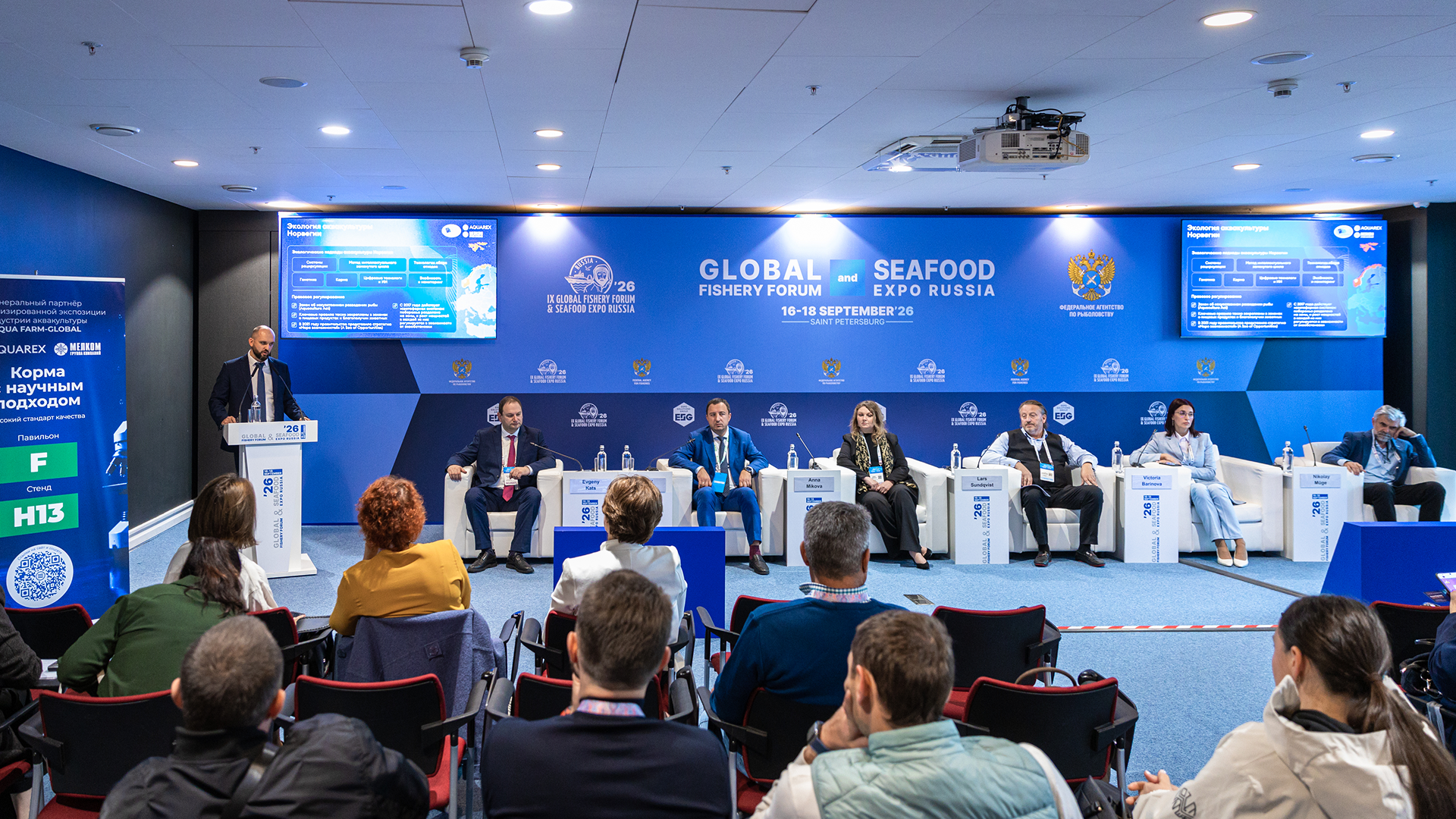
The quality of stocking material also affects production costs. Growth and survival rates determine how much marketable fish a farm gets from each batch, so trout lines need to be evaluated under commercial farming conditions. Nikolay Müge, head of the Department of Genetics and Genomic Selection at VNIRO, explained that researchers need farm data on the number of fish stocked, their final weight, and feed consumption. Those figures give producers a clearer idea of how a particular line will perform.
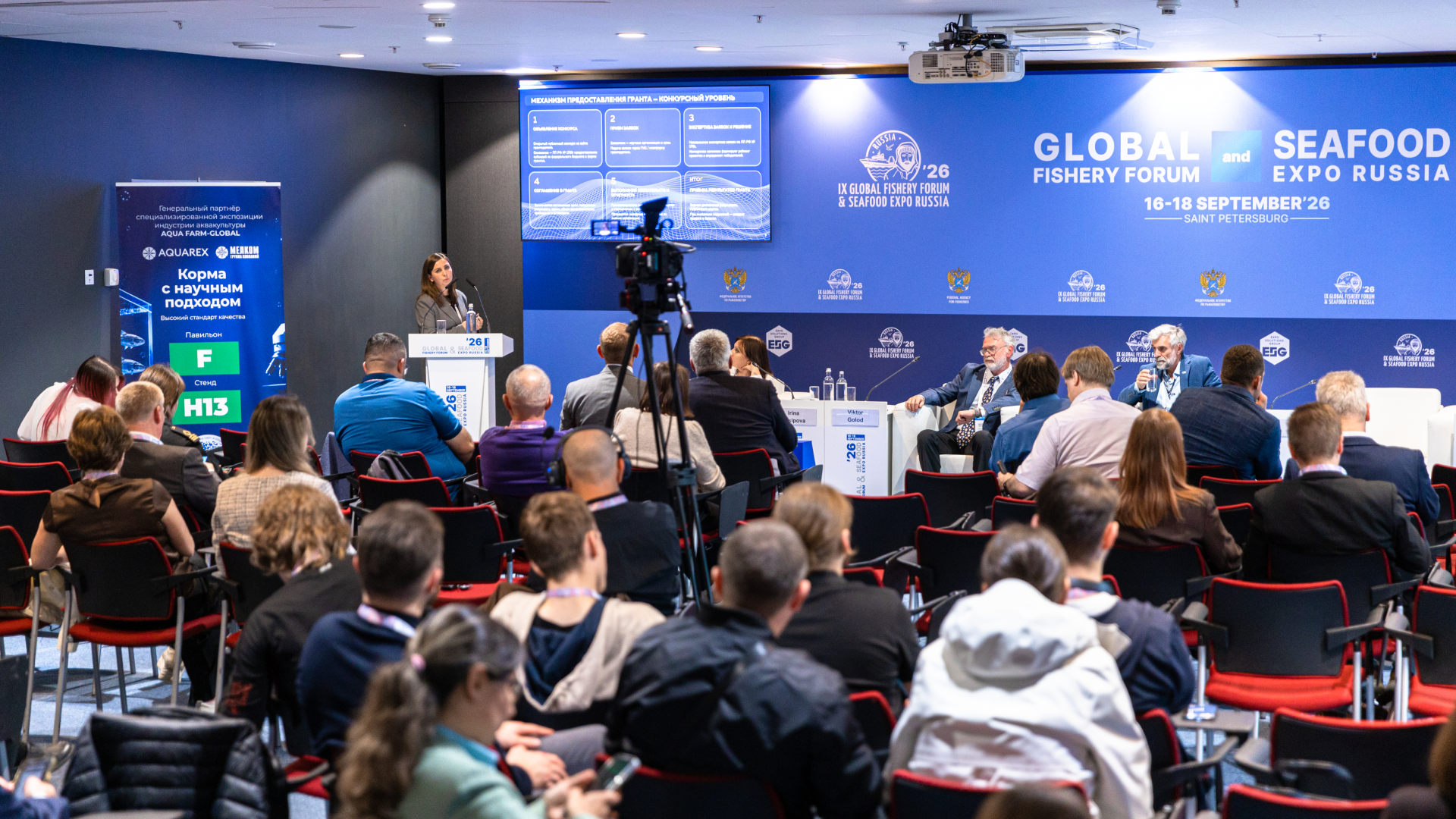
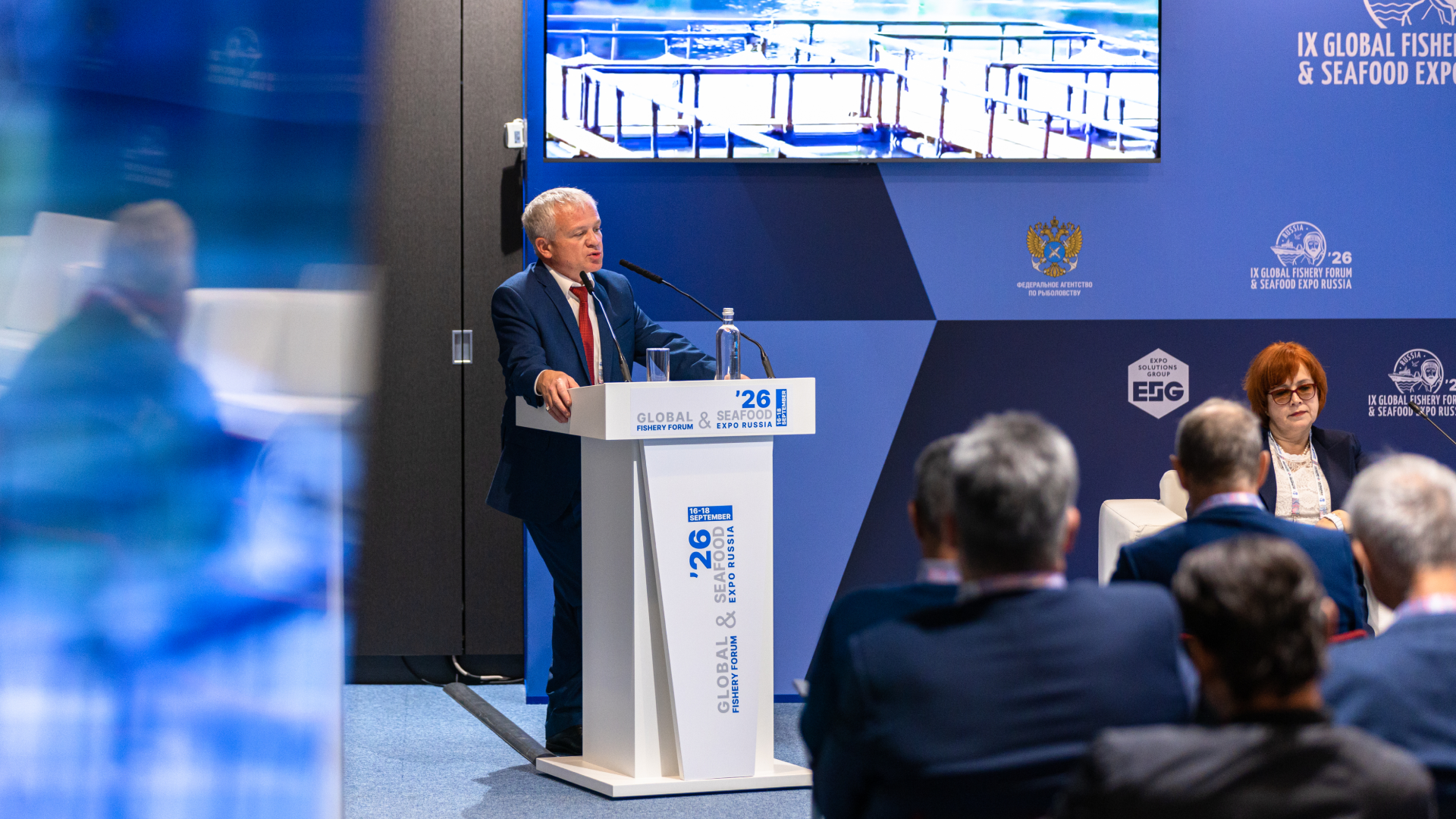
When planning to expand a cage farm, producers have to consider how much production the site can support and what the equipment will cost. Victoria Barinova, head of the Aquaculture Department at VNIRO, noted that environmental pressure varies by region and by the concentration of farms. Water depth and wind conditions also help determine what equipment a site needs. At a session on cage farming, Hermes CEO Sergey Galizin cited a project in the Rostov region wh ere a mooring system designed for local conditions helped the cage installations withstand a severe storm.
International Trout Forum
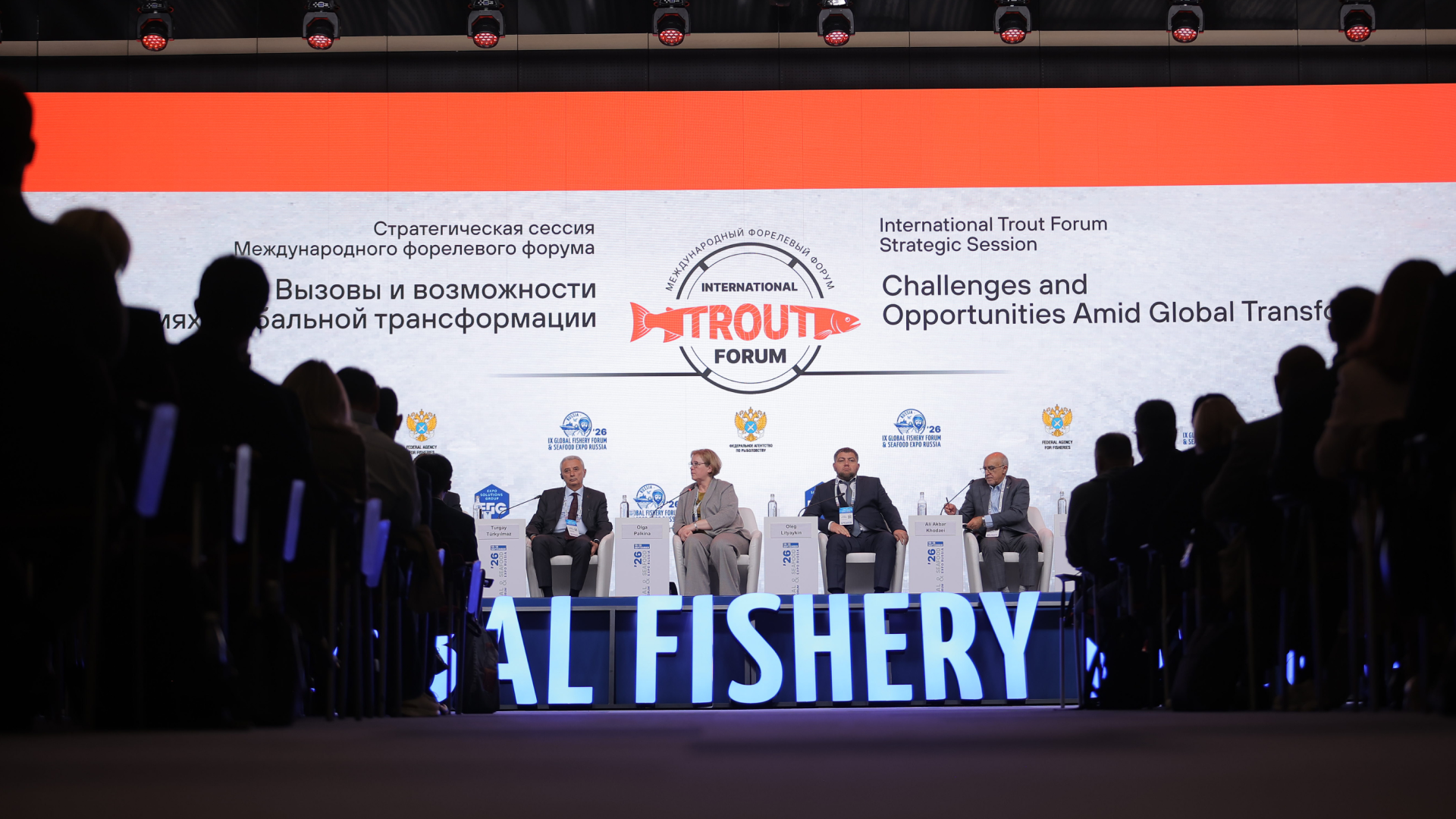
The event hosted the International Trout Forum for the first time. Its strategic session brought together government officials, researchers, and representatives of major trout producers and infrastructure companies from Russia, Türkiye, China, Iran, and other countries.
Participants discussed how the cost of raising trout relates to the value of the finished product. Olga Palkina, Minister of Agriculture and Fisheries of the Republic of Karelia, proposed assessing the industry’s performance per kilogram produced. For farms, that means tracking the cost of weight gain and fish survival rates, then considering how much value different product formats can add.
Turgay Türkyılmaz, Director General of Fisheries and Aquaculture at the Ministry of Agriculture and Forestry of the Republic of Türkiye, explained how Türkiye sets production volumes by region according to local growing conditions and the cost of raising different species. “Turkish salmon” is one of the products the country promotes in export markets. Demand in those markets can also shape the fish that farms raise. Ali Akbar Khodaei, Secretary General of the Iran Fisheries Production and Trading Union, said Iranian producers supplying Russia had to adapt to buyers’ requirements for trout size and color.
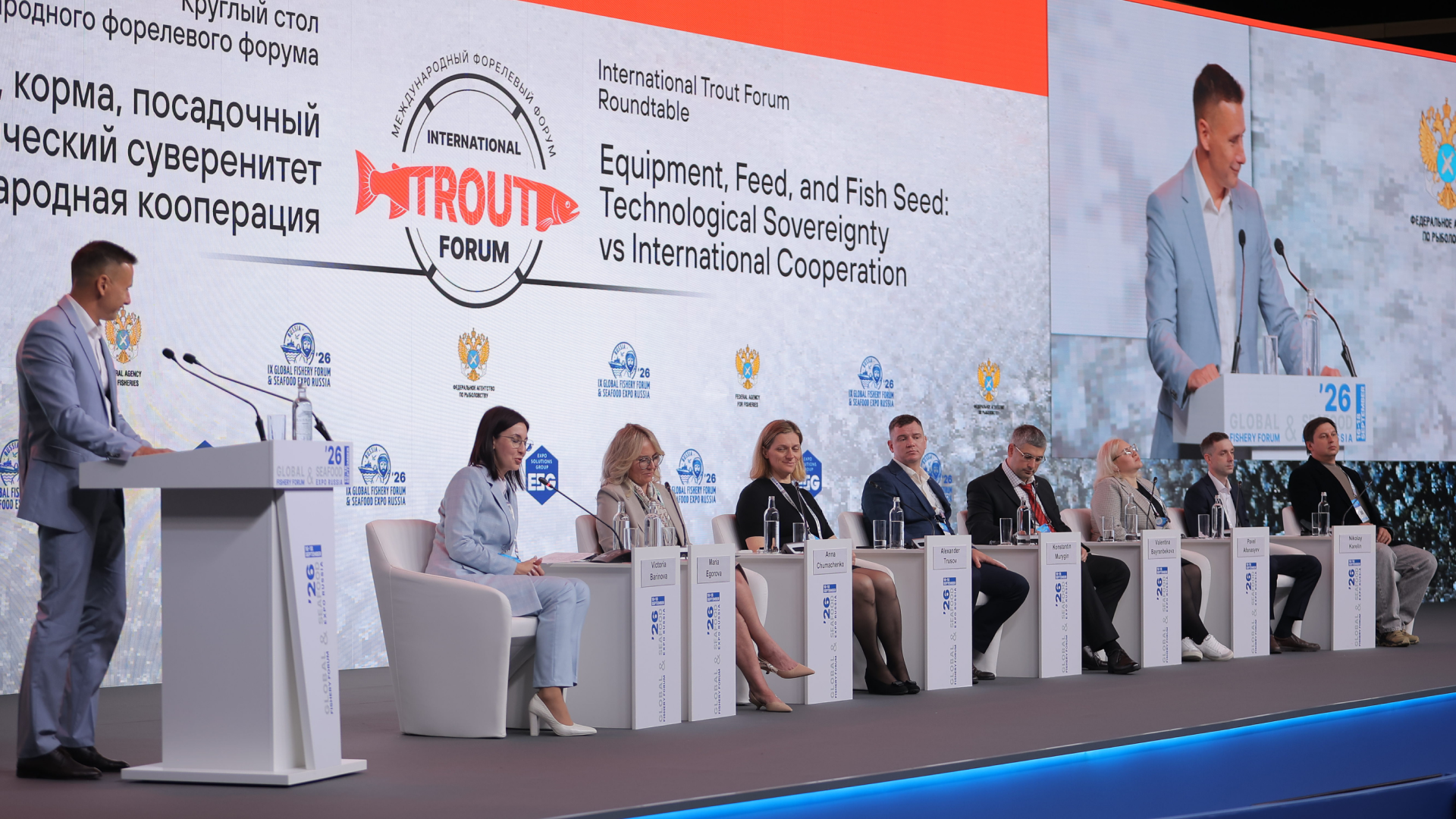
A roundtable following the strategic session looked at practical ways to make aquaculture production and sales more efficient. Reliable supplies of eggs and juvenile fish, for example, help farms plan how much market-size trout they can produce. Pavel Afanasyev of Glavrybvod said a breeding center in Karelia was designed to produce up to 25 million eyed eggs and up to 10 million juvenile fish. Andrey Martynov, CEO of Chernomorskaya Forel, proposed a consortium of farms, research organizations, feed producers, and animal health companies. It would give suppliers and researchers a way to work with farms on breeding, feeding, and disease prevention.
From farm to shelf
The return on each kilogram also depends on how consumers want to buy their fish. Konstantin Klinov, commercial director at Inarctica, told the forum that Russian farms produced around 74,000 metric tons of trout in 2025, up 3% from the previous year. He also pointed to changes in what consumers buy. In recent years, sales of trout steaks rose by 83%, fillets by 57%, and lightly salted trout by 19%, according to the figures he presented. Fillets and steaks save customers the work of cutting up the fish, while lightly salted trout is ready to serve.
To judge whether a product format is profitable, a farm has to weigh sales revenue against the costs of raising, processing, packing, and delivering the fish. Retailers’ requirements also matter, including which products they want to stock and how often they can take deliveries. The temperature required in transit also affects delivery costs.
Each year, Aqua Farm Global gives fish farmers a chance to discuss those decisions directly with processors, packaging and storage suppliers, logistics providers, and retailers. The special exposition gives farms a single venue to assess both what it costs to raise the fish and what it takes to get it to the customer.